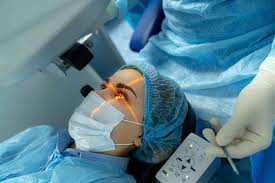

Yes — most patients can drink coffee again within 24 hours of LASIK.
Full caffeine tolerance returns within days, and almost no guide mentions what’s actually checked at your follow-up — eye pressure, not just dryness. A 78,000-participant study found typical coffee habits carry no meaningful risk there, which is why moderating for the first week beats cutting coffee out entirely.
Key Takeaways
- Coffee is generally fine within 24 hours of LASIK — there’s no medical reason to cut it out entirely.
- Caffeine is only a mild, short-lived diuretic — your body builds tolerance within 1 to 4 days, so it doesn’t meaningfully dehydrate regular coffee drinkers.
- A 350-participant clinical study found caffeine has protective, anti-inflammatory effects on dry eye disease and meibomian gland function — the opposite of the “caffeine dries out your eyes” assumption most pages repeat.
- The real reason to moderate coffee for about a week is your healing tear film, not the caffeine itself.
- The stricter caffeine-avoidance advice applies before surgery, not after — the two windows get conflated constantly.
- Caffeine’s effect on eye pressure is smaller than assumed — a 78,000-participant study found no meaningful glaucoma risk from typical intake, except in a specific high genetic-risk group.
The Facts, Verified
What the actual research shows — not the blanket “avoid caffeine” line copied across most recovery guides.
| Verified fact | Why it matters for you |
|---|---|
| Caffeine is a mild diuretic, but your body builds tolerance to that effect within 1 to 4 days of regular use | Regular coffee drinkers don’t experience meaningful dehydration from their normal intake |
| A clinical study of 350 participants found caffeine consumption was linked to a healthier ocular surface, lower tear-film inflammation, and reduced dry eye prevalence | Directly challenges the assumption that caffeine worsens dry eye |
| Caffeine reduces NF-κB inflammatory signaling in ocular surface and meibomian gland cells in lab studies | Gives an actual mechanism, not just a correlation |
| Pre-op caffeine restriction (a few hours before surgery) is a separate guideline from post-op recovery | Explains why “avoid caffeine” advice for LASIK often doesn’t specify which window it means |
Sources: caffeine/dry eye and meibomian gland clinical-experimental study; caffeine fluid-balance research.
Why Do People Think Coffee Is Bad for Your Eyes After LASIK?
Because caffeine is dehydrating — or so the reasoning goes. Dry eyes are common in the days after LASIK while your corneal nerves and tear film recover, so it’s natural to assume anything mildly diuretic makes that worse. It’s also why guidance on avoiding caffeine before LASIK exists in the first place — but that’s a pre-op instruction, mixed into post-op advice it was never really about.
The diuretic effect itself is real but weak, and your body adapts within days — the same way caffeine “jitters” fade with regular use.
What Does Current Research Actually Say About Caffeine and Dry Eye?
The opposite of what most recovery pages assume. A clinical and experimental study of 350 participants (200 caffeine consumers, 150 controls) found the caffeine group had a healthier ocular surface, lower inflammatory tear markers, and less dry eye disease overall. In lab models, caffeine reduced inflammatory signaling and cell damage in meibomian gland and corneal epithelial cells, and preserved more normal gland structure.
That doesn’t mean coffee treats post-LASIK dryness itself — the study looked at habitual consumption and general dry eye disease, not the acute healing window. But it does mean the “caffeine is the enemy of dry eyes” framing most pages still use isn’t backed by current evidence.
Does Coffee Affect Your Eye Pressure at Follow-Up Checks?
This is the part almost no “coffee after LASIK” article covers, even though intraocular pressure (IOP) is checked at every post-op visit. A UK Biobank study of nearly 78,000 participants found habitual caffeine intake was, if anything, weakly linked to slightly lower IOP for most people, with no meaningful increase in glaucoma risk overall.
The one exception: people in the highest genetic-risk group for glaucoma showed a small measurable rise (about 0.35 mmHg) at high daily intake — comparable to a single major genetic variant’s effect. If you have a family history of glaucoma or already-elevated eye pressure, mention it at your follow-up; for everyone else, ordinary coffee habits aren’t something your IOP check needs to account for.
What’s the Real Guideline After LASIK?
Most patients can have coffee again within 24 hours, the same general timing as resuming other normal drinks. For about a week afterward — while your tear film is still settling — moderating rather than eliminating caffeine is the sensible middle ground: stay well hydrated overall, and don’t let coffee replace the water and lubricating drops your surgeon recommends.
If you’re already managing noticeable dryness, our guide on treating dry eyes after LASIK covers what actually helps beyond diet.
When Should You Actually Be More Cautious?
| Your situation | Coffee after LASIK | What to do |
|---|---|---|
| Normal recovery, 24+ hours post-surgery, no unusual dryness | ✅ Generally fine in normal amounts | Stay hydrated alongside it, as usual |
| Noticeable dryness or grittiness in the first week | ⚠️ Moderate, don’t eliminate | Prioritize water and prescribed drops; cut back rather than quit |
| You typically drink 4+ cups a day | ⚠️ Consider scaling back temporarily | High intake plus healing tear film is worth easing off, not avoiding entirely |
| The day of surgery itself | ❌ Avoid — this is the pre-op window | Follow your surgeon’s same-day instructions specifically |
Source: general post-refractive-surgery dry eye recovery guidance, applied to common patient scenarios.
How Do You Protect Your Tear Film in the First Week?
Coffee itself isn’t the main lever here — a few simple habits do more for your recovery than cutting caffeine ever would:
- Use your prescribed lubricating drops on schedule, not just when your eyes feel dry.
- Drink water alongside your coffee, not instead of it — covers any mild diuretic effect without giving up your routine.
- Avoid rubbing your eyes in the first few days, even when dryness makes it tempting.
- Take short breaks from screens — reduced blink rate dries eyes out faster than caffeine does.
If dryness lingers well past a week, that’s worth flagging rather than waiting out — see what actually causes dry eyes beyond the surgery itself, and a few simple remedies worth trying alongside your drops.
How Does Pre-Op Guidance Differ From Post-Op Guidance?
| Before LASIK | After LASIK | |
|---|---|---|
| Caffeine guidance | Avoid for a few hours before surgery | Resume within 24 hours; moderate for ~1 week |
| Main reason | Keep you calm and steady during the procedure | Support tear-film healing, not caffeine “danger” |
| Strictness | Firm, short window | Flexible, based on how your eyes feel |
| What’s often confused | Patients read the strict pre-op rule and assume it applies for weeks afterward — it doesn’t | |
Source: standard pre-op vs. post-op refractive surgery instructions.
What About Other Drinks and Food After LASIK?
Coffee isn’t the only thing patients ask about. Alcohol carries its own, separate timing advice, and simple questions like whether milk is fine or whether spicy food is a problem come up just as often — none of them are the dealbreakers older advice makes them sound like. If you’re having SMILE Pro instead of LASIK, the same caffeine logic applies, with its own recovery timeline.
Bottom Line
You don’t need to give up coffee after LASIK — most patients can have it again within a day, and current research actually leans toward caffeine supporting ocular surface health, not harming it. The one-week window of moderation is about your healing tear film, not caffeine being dangerous. If your dryness feels more than mild, reach out to our team rather than guessing.
FAQs
Can I drink coffee the day after LASIK?
Yes, in most cases — coffee is generally fine starting around 24 hours post-surgery.
Does caffeine actually dehydrate your eyes?
Only mildly and temporarily — your body builds tolerance to caffeine’s diuretic effect within a few days, so regular drinkers see little real dehydration.
Is caffeine bad for dry eye disease?
Recent research actually found the opposite — caffeine was linked to a healthier ocular surface and less dry eye disease in a 350-participant study.
Why do some pages say to avoid caffeine around LASIK at all?
That guidance is usually about the pre-op window, a few hours before surgery — not the recovery period afterward.
Will coffee affect my eye pressure check at follow-up?
Unlikely for most people — a large study found no meaningful glaucoma risk from typical caffeine intake, apart from a small effect in those with high genetic risk. Mention any glaucoma history to your surgeon regardless.
What should I drink instead if my eyes feel dry?
Plain water alongside your prescribed lubricating drops does more for tear-film recovery than cutting out coffee entirely.
👁️ MEDICALLY REVIEWED BY
Padmashree Dr. Vipin Buckshey
Optometrist & Laser Vision Correction Specialist | AIIMS Graduate, 1977 | Padma Shri Honouree | Official Optometrist to the President of India | Former President, Indian Optometric Association | Founder, Visual Aids Centre
Patients are often told to cut out caffeine entirely after LASIK, based on advice meant for the hours before surgery, not the weeks after. Dr. Vipin Buckshey founded Visual Aids Centre in 1980, and in 1999 it became the first eye centre in Delhi to introduce LASIK. The centre reports over 250,000 Laser Vision Correction procedures to date. This article reflects current research on caffeine and ocular surface health and is general information rather than medical advice — your own surgeon’s evaluation of your healing always takes priority. Read more at our story.