
Your LASIK surgery is done, your vision is already sharper than it has been in years, and somewhere in the corner of your room your bike is sitting there waiting. The urge to get back on it is real — cycling is not just exercise for most riders, it is a daily commute, a weekend ritual, or a competitive discipline that is hard to pause. The good news is you will be back on it sooner than you expect. The more useful news is that doing it right in the first two weeks makes the difference between a smooth recovery and a setback.
This guide from Visual Aids Centre walks you through the exact cycling-after-LASIK timeline, explains why each phase of restriction exists, gives you the specific precautions that make outdoor cycling safe during recovery, and tells you what the long-term payoff looks like for cyclists who get their vision corrected.
Key Takeaways
- Most LASIK patients can return to stationary or very light cycling within 2–3 days. Outdoor road cycling is typically safe after 1–2 weeks. Strenuous disciplines — mountain biking, competitive road racing — require a minimum four-week wait and surgeon clearance.
- The primary risks of early cycling are wind-driven tear film evaporation (worsening dry eye), airborne debris reaching the healing corneal surface, and sweat entering the eye.
- Protective wraparound cycling glasses are not optional during the recovery period — they serve a genuine clinical function, not just a comfort one.
- The corneal flap’s adhesion increases significantly over the first four weeks. Activities that involve a fall risk — particularly off-road or high-speed cycling — should wait until flap adherence is robust enough to tolerate accidental eye impact.
- Post-LASIK cyclists often report that sharper, unaided vision significantly improves their riding experience — no fogging, no lens movement, no contact lens dryness mid-ride.
What Happens During LASIK and Why It Affects Cycling
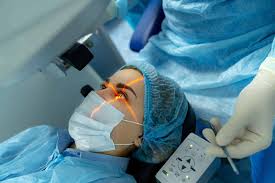
Understanding why cycling restrictions exist after LASIK requires a basic understanding of what the surgery does. LASIK reshapes the cornea by creating a thin hinged flap in the anterior corneal tissue, lifting it, and using a laser to reshape the underlying stroma before repositioning the flap. The flap heals by natural adhesion rather than suture — and in the first two to four weeks, that adhesion increases progressively but is not yet equivalent to uncut corneal tissue.
Simultaneously, the corneal sensory nerves that trigger tear production are partially disrupted, producing the temporary dry eye that most LASIK patients experience in the recovery period. The corneal surface is also more sensitive to environmental stressors — wind, dust, UV light, and particulate matter — than it normally is. These two factors — a healing flap and a compromised tear film — are precisely what outdoor cycling challenges. Our overview of LASIK eye surgery gives the full procedure context for patients who want to understand the surgical basis of the recovery restrictions.
Cycling After LASIK — The Week-by-Week Timeline
Days 1–3: Rest, No Cycling
The first 24–72 hours after LASIK are the most vulnerable window for the healing cornea. Vision is functional but fluctuating, light sensitivity is often significant, and the flap is in its earliest adhesion phase. No cycling — stationary or outdoor — is appropriate during this period. Rest, lubricating drops on schedule, and protective shields at night are the priorities.
Days 3–7: Stationary Cycling Acceptable
By days three to five, most patients have adequate visual clarity for static, controlled environments. A stationary exercise bike indoors — at low resistance and low heart rate — is generally acceptable for most patients at this stage. The absence of wind, debris, UV exposure, and fall risk makes this a low-risk option for riders who cannot bear a full week away from the saddle. Avoid anything that raises heart rate significantly or produces heavy sweating in the eye area.
Week 1–2: Easy Outdoor Road Cycling
With surgeon clearance — typically granted at the one-week post-operative review — most patients can return to easy outdoor road cycling. Paved, quiet roads in low-traffic environments reduce the risk of falls and limit dust and pollution exposure. Protective wraparound eyewear must be worn on every outdoor ride during this phase. Avoid long rides: fatigue increases blink suppression, which worsens the dry eye effect of wind exposure.
Week 4+: Full Return With Surgeon Clearance
After four weeks, flap adhesion is robust enough for most normal cycling activities. Strenuous road cycling, longer rides, and competitive training can typically resume following your four-week post-operative review. Mountain biking, BMX, and other disciplines with significant fall and impact risk require specific surgeon clearance rather than a general timeline — they are discussed separately below.
The broader vision stabilisation timeline that determines when cycling clearance is safe at each stage is covered in our resource on when vision stabilises after LASIK — useful reading for cyclists who want to understand the exact relationship between healing progress and activity clearance.
Why You Need to Wait — The Specific Risks
Wind and Tear Film Evaporation
Wind is the primary environmental enemy of post-LASIK eyes during cycling. Moving at cycling speed — even at a modest 20 km/h — generates significant airflow across the eye surface. For an eye already producing below-normal tear volume due to LASIK nerve disruption, this continuous airflow accelerates tear film evaporation rapidly, producing the gritty, burning sensation of severe dry eye. That discomfort then triggers rubbing — the one post-LASIK behaviour that genuinely risks flap integrity. Proper cycling eyewear sealing the area around the eyes is the only reliable mitigation.
Airborne Debris
Road cycling produces exposure to road dust, insects, pollen, and exhaust particles. Off-road cycling adds soil, grit, and vegetation debris. Any of these reaching the healing corneal surface in the first two to four weeks creates irritation that, at best, delays healing and at worst introduces infection risk to a surgical site. The eye’s normal capacity to flush debris with tears is reduced while tear production is suppressed post-LASIK. Our guide on light sensitivity after LASIK covers the related environmental sensitivities that make the early post-operative period more challenging for outdoor activities — a useful companion to this cycling guide.
Sweat
Sweat carries salt, bacteria, and skin products from sunscreen or cosmetics. On a warm-weather ride or a hard training session, sweat running into the eyes introduces all of these to a healing corneal surface. A sweatband or cycling cap positioned to redirect sweat away from the eye area is a simple, effective precaution that significantly reduces this specific risk during the first four weeks of recovery.
Fall and Impact Risk
Any activity with a fall risk carries an additional consideration in the post-LASIK period: a direct impact to the eye area could stress the healing flap. This risk is most significant in the first four weeks, when flap adhesion is still increasing. It is the primary reason strenuous and off-road cycling disciplines require a longer wait than easy road cycling.
Precautions for Cycling After LASIK
- Wraparound cycling glasses on every outdoor ride — not sunglasses you already own, but proper cycling eyewear that seals around the orbital area and blocks airflow from all angles. UV-A and UV-B protection is required; post-LASIK corneas are more UV-sensitive during recovery.
- Lubricating drops before and after rides — pre-load the tear film before setting out to reduce wind-related evaporation, and reapply drops immediately on returning. Preservative-free formulations are recommended throughout the recovery period.
- Sweatband or cycling cap — positioned to channel perspiration away from the eye area on any ride involving significant exertion.
- Quiet, clean roads for the first two weeks — high-traffic roads produce more particulate exposure; busy roads increase fall risk from other vehicle interactions. Start in parks or low-traffic residential areas.
- Shorter rides initially — fatigue suppresses blink rate and reduces natural tear film distribution. End rides before your eyes start feeling uncomfortable rather than after.
- No rubbing mid-ride or post-ride — if debris enters the eye during a ride, stop, close the eye gently, and apply lubricating drops from your kit. Do not rub, regardless of the discomfort.
Road Cycling vs Mountain Biking — Different Timelines
Not all cycling carries the same recovery risk profile. Road cycling on smooth, paved surfaces in good visibility has a relatively predictable risk profile — wind, dust, and exertion are the primary variables, and all are manageable with eyewear and drops. Mountain biking introduces different variables: unpredictable terrain, higher fall probability, debris thrown up by tyres, overhanging vegetation, and greater exertion in dustier environments.
The four-week general timeline applies to easy road cycling. Mountain biking, gravel riding, BMX, and any discipline with significant fall or debris impact risk requires a specific surgeon clearance conversation rather than a general timeline application. Most surgeons recommend waiting six to eight weeks before returning to off-road disciplines, with formal ophthalmological clearance before the first trail ride. This is in the same protective spirit as the activity restrictions that apply to swimming — another high-risk post-LASIK activity that many patients are keen to resume. Our resource on swimming after LASIK covers a comparable set of water-specific risks that follow a similar conservative timeline for a similar reason.
General Recovery Tips That Support a Faster Return to Cycling
- Follow your drops schedule precisely — antibiotic and anti-inflammatory drops are clinically active participants in your healing, not optional extras. Consistent use reduces the dryness that is your biggest cycling obstacle.
- Keep your bedroom environment clean and humidified — managing dryness overnight directly affects how your eyes feel during morning rides.
- Avoid touching your eyes — even to remove debris post-ride. Drops are the correct tool; fingers are not.
- Attend every post-operative review — the one-week, one-month, and three-month reviews are where your surgeon confirms progression and grants activity clearance. These are not bureaucratic appointments. They are the clinical milestones that determine when each restriction lifts.
Managing the light sensitivity that often peaks around the one-to-two week mark — and that can make outdoor rides on bright days genuinely uncomfortable. Understanding that timeline helps cyclists plan their first outdoor rides around weather and time of day for maximum comfort.
What LASIK Actually Changes About Your Cycling Experience
Once recovery is complete, the practical improvements to cycling with corrected unaided vision are meaningful and consistently cited by post-LASIK cyclists. No prescription lenses to fog in cold weather or rain. No contact lens dryness that peaks mid-ride. No anxiety about a lens moving in the wind at speed. No dependency on prescription cycling glasses that cost significantly more than standard eyewear and need updating when your prescription changes.
Peripheral vision quality — the awareness of vehicles, cyclists, and obstacles approaching from the side — is also improved for many patients. Prescription lenses create optical distortion at the periphery of the lens that unaided corrected vision does not. Many post-LASIK cyclists describe a qualitatively different riding experience — not just clearer, but more spatially aware and more confident at speed. For the full picture of what long-term LASIK results look like for patients across different age groups and prescription types.
Conclusion
You can ride your bike after LASIK — the question is which kind of riding, and when. Stationary indoor cycling in days three to five. Easy outdoor road cycling from week one to two. Strenuous and off-road disciplines from week four with surgeon clearance. The restrictions are not conservative for their own sake; they reflect the specific environmental risks — wind, debris, sweat, falls — that interact with a healing corneal flap and compromised tear film in the early post-operative period.
Get those two to four weeks right and the payoff is clear unaided vision on every ride from that point forward. If you are still in the planning stage and want to understand the full LASIK recovery picture before your surgery date, book a consultation at Visual Aids Centre and get a recovery plan tailored to your sport and lifestyle.
Frequently Asked Questions (FAQs)
Can I ride a bike the day after LASIK?
No. The first 48–72 hours require rest. Vision is still settling, light sensitivity is typically significant, and the corneal flap is in its earliest healing phase. Stationary, low-intensity cycling can begin around day three for most patients, but only with surgeon confirmation that your recovery is on track.
When can I cycle outdoors after LASIK?
Easy outdoor road cycling on smooth, quiet roads with proper protective eyewear is generally appropriate from one to two weeks post-surgery for most patients, following the one-week post-operative review. Your surgeon’s specific clearance based on your healing progress supersedes this general timeline.
Do I need to wear special glasses when cycling after LASIK?
Yes — proper wraparound cycling eyewear is required for every outdoor ride during the recovery period. The glasses need to seal around the orbital area to block direct airflow, provide UV-A and UV-B protection, and prevent debris from reaching the eye. Standard fashion sunglasses do not provide adequate coverage.
Can cycling wind worsen dry eye after LASIK?
Yes, significantly. Wind at cycling speed rapidly evaporates tear film from an already under-producing post-LASIK eye. Proper wraparound cycling glasses and lubricating drops applied before and after rides are the primary mitigations. This risk diminishes progressively as corneal nerve recovery restores normal tear production — typically over three to six months.
When can I return to mountain biking after LASIK?
Mountain biking involves higher fall risk and greater debris exposure than road cycling. Most surgeons recommend waiting six to eight weeks and obtaining specific clearance before returning to off-road disciplines. This is distinct from the four-week general clearance for easy road cycling.
Can sweat affect LASIK recovery during cycling?
Sweat carries salt, bacteria, and skin products that can irritate healing eyes. Wearing a sweatband or cycling cap to redirect perspiration away from the eye area significantly reduces this risk during rides in the first four weeks of recovery.
👁️ MEDICALLY REVIEWED BY
Padmashree Dr. Vipin Buckshey
BS Ophthalmology | AIIMS Graduate, 1977 | Padma Shri Honouree | Active Lifestyle Recovery Specialist, Visual Aids Centre
Patients who lead active lives — cyclists, runners, swimmers, athletes — often find that the standard post-operative instruction sheet does not adequately address the specific risks of their activity during LASIK recovery. Dr. Vipin Buckshey’s approach at Visual Aids Centre has always been to give patients the sport-specific and activity-specific guidance they actually need to make good decisions during recovery — rather than conservative blanket restrictions that leave patients guessing. The week-by-week cycling timeline in this article reflects the clinical reasoning behind each restriction and the specific risk each phase addresses. An AIIMS alumnus, Padma Shri honouree, and former President of the Indian Optometric Association. Read more about our patient-centred approach at our story.