If you have researched WaveLight laser vision correction, you have probably come across a device with an unusual name: the Vario Topolyzer. It sounds like something from a spaceship, but it is actually one of the most important instruments in modern refractive surgery — and it does its work before the laser is ever switched on.
In this guide from Visual Aids Centre, we will explain exactly what the WaveLight Topolyzer Vario is, what it measures, how it fits into the WaveLight platform, and why a single diagnostic scan can make such a difference to the quality of your vision after surgery.
Key Takeaways
- The Vario Topolyzer is a high-resolution corneal topographer made by Alcon, part of the WaveLight refractive platform.
- It maps your cornea using up to 22,000 data points captured with Placido-disc technology — far more detail than a glasses prescription provides.
- This map is the foundation of topography-guided Contoura Vision treatment, smoothing irregularities a standard correction would miss.
- Better mapping means better outcomes: sharper vision and fewer night-time glare and halo problems for suitable patients.
- The device is purely diagnostic — it measures your eye; it does not perform the surgery itself.
What Is the Vario Topolyzer?
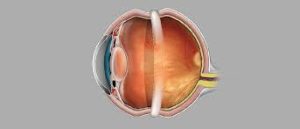
The WaveLight Topolyzer Vario — commonly shortened to “Vario Topolyzer” — is an advanced corneal topographer manufactured by Alcon. In plain terms, a topographer is a device that creates a detailed map of the surface of your cornea, the clear dome at the front of your eye. Think of it like a satellite mapping the peaks and valleys of a mountain range, except the terrain here is microscopic and the precision is extraordinary.
It belongs to the same family of pre-surgery diagnostics that any thorough refractive workup relies on. Where a basic eye test measures your prescription in quarter-diopter steps, instruments like this one measure the actual shape of your eye. If you want the bigger picture of how surgeons assess your cornea before treatment, our overview of corneal topography for LASIK explains where this device fits among the full set of tests.
How the Vario Topolyzer Works
The technology behind it is elegantly simple in principle. The device projects a series of illuminated concentric rings — known as a Placido disc — onto the surface of your eye and photographs how those rings reflect back. A perfectly smooth cornea reflects them evenly; any irregularity distorts the pattern, and the software reads that distortion to reconstruct the exact shape of your corneal surface.
The scan itself is quick, non-contact, and completely painless — nothing touches your eye. You simply look at a target while the device captures the data, often taking several scans so the surgeon can select the cleanest, most consistent map. Because debris or a dry surface can blur the reading, your eyes are checked and prepared first. It is one small part of a broader assessment; you can see what else is involved in our guide to how the cornea is tested before LASIK.
What It Measures — and Why That Matters
The headline number is the one most clinics quote: the Vario captures up to 22,000 individual data points across your cornea. To put that in perspective, older wavefront-based mapping might gather a few hundred points. This density is what allows the surgery to address detail that a conventional prescription simply cannot reach.
Specifically, it measures:
- Corneal curvature — the steepness and flatness across the whole surface.
- Elevation — the precise highs and lows that make your cornea uniquely yours.
- Surface irregularities — the micro-bumps that cause visual distortions like glare and halos.
These irregularities are closely tied to higher-order aberrations — the subtle optical errors that glasses never correct. Mapping them is what makes it possible to treat conditions like irregular astigmatism, and it is why this approach differs so much from a one-size-fits-all correction.
Its Role in WaveLight Surgery
The Vario Topolyzer sits at the start of the WaveLight workflow. Here is the simple chain of events:
From Map to Treatment Plan
Once the device has captured your corneal map, the data travels through the WaveLight planning network to a surgical computer. There it is combined with your refractive prescription to generate a customised ablation profile — essentially a precise set of instructions telling the excimer laser exactly where and how much tissue to reshape.
Powering Contoura Vision
This topography-guided approach is the engine behind Contoura Vision, the WaveLight platform’s topography-guided LASIK treatment. Rather than treating your prescription alone, it reshapes the cornea according to its actual surface map.
It is worth being precise about one thing: the Topolyzer is a diagnostic device. It maps; it does not cut or reshape. The actual correction is performed by the WaveLight excimer laser, guided by the data the Vario provided.
Why It Matters for Your Results
Here is the part that affects you directly. In topography-guided surgery, the quality of your outcome is only as good as the quality of your map. A meticulous, high-resolution scan gives the laser accurate instructions; a poor one would do the opposite. That is why surgeons are so careful about capturing clean images and why the device takes multiple readings.
For patients, good mapping translates into real, noticeable benefits: crisper vision, better performance in low light, and fewer complaints of glare or halos around headlights at night. It is the difference between correcting your prescription and correcting your eye. To see how this fits within the wider evolution of laser technology, our look at newer ray-tracing approach of WaveLight Plus InnovEyes puts the Vario’s contribution in context.
Conclusion
The Vario Topolyzer may not be the part of LASIK that patients usually think about, but it is quietly one of the most important. By mapping your cornea in extraordinary detail — 22,000 points and counting — it gives the WaveLight laser the precise blueprint it needs to deliver a result tailored to your unique eye, not just your prescription. Better data in, better vision out.
If you would like to know what your own corneal map reveals and which treatment suits it best, the team at Visual Aids Centre can help. Book a diagnostic consultation and we will walk you through your results in plain language.
Frequently Asked Questions (FAQs)
What does the Vario Topolyzer do?
It is a corneal topographer that maps the surface of your eye in up to 22,000 data points, creating the detailed blueprint used to plan topography-guided WaveLight laser treatment.
Is the Vario Topolyzer scan painful?
No. It is completely non-contact and painless. You simply look at a target while the device photographs the reflection of light rings off your cornea.
Does the Vario Topolyzer perform the surgery?
No. It is purely a diagnostic device. It maps your cornea; the WaveLight excimer laser performs the actual correction using that map.
How many data points does it capture?
Up to 22,000 elevation points across the cornea, often gathered over several scans — far more detail than a standard prescription or older wavefront mapping.
Why is corneal mapping so important?
Because the treatment is built from the map, accuracy is everything. A precise scan lets the laser smooth irregularities, improving sharpness and reducing night-time glare and halos.
Is this the same device used for WaveLight Plus InnovEyes?
Not exactly. WaveLight Plus InnovEyes uses its own all-in-one Sightmap capture for ray-tracing, while the Vario Topolyzer is the corneal topographer central to topography-guided Contoura Vision on the same WaveLight platform.
👁️ MEDICALLY REVIEWED BY
Padmashree Dr. Vipin Buckshey
Optometrist & Laser Vision Correction Specialist | AIIMS Graduate, 1977 | Padma Shri Honouree | Former President, Indian Optometric Association
Visual Aids Centre was founded by Vipin Buckshey and became the first eye centre in Delhi to introduce LASIK surgery, in 1999. Across more than 250,000 laser vision correction procedures — among the highest by any private eye centre in India — one principle has held firm: accurate diagnostics are the foundation of an excellent result. The centre’s investment in advanced corneal mapping reflects that belief. As the official optometrist to the President of India and a Padma Shri honouree, Dr. Buckshey draws on four decades of refractive experience to ensure every treatment plan begins with a precise picture of the patient’s eye. Learn more about our story.