
If you’ve been told your cornea might be “too thin” for laser eye surgery, SMILE could be the procedure that changes the equation. But how thin is too thin—and what’s the actual minimum corneal thickness needed for SMILE or SMILE Pro? The answer involves more than a single number.
Every refractive procedure removes some corneal tissue to reshape the eye’s focusing power. The critical safety question is always: after removing the tissue needed to correct your prescription, will enough cornea remain to maintain structural integrity for the rest of your life? That remaining thickness—called the residual stromal bed (RSB)—is the real measure of eligibility, not your starting corneal thickness alone. This guide explains the numbers, the reasoning behind them, and why SMILE Pro often works for patients who’ve been turned away from Femto LASIK or Contoura Vision.
Key Takeaways
- Most surgeons require a minimum starting corneal thickness of approximately 475–500 microns for SMILE/SMILE Pro surgery.
- The residual stromal bed (RSB) must remain at least 250 microns after lenticule extraction—this is the true safety threshold.
- SMILE preserves more corneal tissue than LASIK because it doesn’t create a flap, making it suitable for some patients with thinner corneas.
- Corneal thickness alone doesn’t determine eligibility—your prescription, corneal topography, and biomechanical strength all factor in.
Why Corneal Thickness Matters in Refractive Surgery
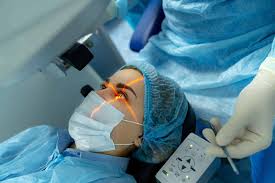
The average human cornea is about 540–550 microns thick at its centre (roughly half a millimetre). Every laser vision correction procedure works by removing a precise amount of corneal tissue to change the eye’s refractive power. In LASIK, tissue is ablated from the stromal bed after a flap is created. In SMILE, a disc-shaped piece of tissue called a lenticule is carved within the stroma and extracted through a small incision—no flap needed.
If too much tissue is removed relative to the starting thickness, the cornea can become structurally weak over time. This weakening can lead to a condition called post-surgical ectasia—a progressive bulging and thinning of the cornea that causes irregular astigmatism and deteriorating vision. Ectasia is rare (affecting less than 0.1–0.5% of patients when proper screening is followed), but it’s the primary reason surgeons are rigorous about corneal thickness requirements.
The Minimum Thickness for SMILE: What the Numbers Actually Mean
While there isn’t a universally mandated “minimum” published in a single guideline, the working consensus among experienced refractive surgeons is that SMILE and SMILE Pro candidates should have a central corneal thickness (CCT) of at least 475–500 microns. However, this number is meaningless without context—it’s not a simple pass/fail threshold.
Why the Range, Not a Single Number?
A patient with a cornea of 480 microns and a prescription of −2.00 D needs far less tissue removed than someone with the same corneal thickness and a prescription of −8.00 D. The first patient may be an excellent SMILE candidate; the second is almost certainly not. That’s why your prescription power and your corneal thickness must be evaluated together—never in isolation.
The Cap Thickness Variable
In SMILE surgery, the laser creates a “cap” of corneal tissue above the lenticule. This cap is typically set at 110–130 microns by the surgeon, depending on the clinical situation. A thinner cap preserves more stroma below for the residual bed, which is why the surgeon’s choice of cap thickness directly affects eligibility for patients with borderline corneal measurements. At Visual Aids Centre, cap thickness is customised for each patient based on their individual anatomy.
Residual Stromal Bed: The Number That Really Decides
The residual stromal bed (RSB) is the thickness of untouched corneal stroma remaining beneath the extracted lenticule. This is the structural backbone of the cornea after surgery, and it must be thick enough to resist intraocular pressure for decades without progressive bulging.
The widely accepted minimum RSB for SMILE is 250 microns, though many surgeons prefer a more conservative margin of 260–280 microns. Here’s how the calculation works in practice:
RSB = Total corneal thickness − Cap thickness − Lenticule thickness
For example: a patient with a 500-micron cornea, a 120-micron cap, and a lenticule thickness of 100 microns (corresponding to approximately −6.00 D correction) would have an RSB of 280 microns—comfortably above the minimum. The same patient needing a 150-micron lenticule (roughly −9.00 D) would only have 230 microns remaining—below the safe threshold and ineligible for the procedure.
Your surgeon calculates this precisely using pre-operative measurements and the planned treatment parameters before any laser is activated.
SMILE vs LASIK: Why Thin Corneas Fare Better with SMILE
One of SMILE’s key structural advantages over LASIK is tissue conservation. In LASIK, a flap of 90–120 microns is created and lifted, then the excimer laser ablates tissue from the exposed stromal bed. That flap never contributes to the cornea’s biomechanical strength again—it sits back in place but doesn’t bear structural load. So the effective RSB calculation in LASIK must subtract the full flap thickness.
In SMILE Pro, there’s no flap. The cap remains intact and connected to the surrounding cornea, contributing partially to overall biomechanical stability. Multiple studies comparing SMILE Pro and LASIK have shown that SMILE preserves stronger corneal biomechanics for the same level of correction—meaning a patient who falls just short of LASIK’s thickness requirements may still qualify for SMILE.
This is precisely why patients with corneas in the 480–510 micron range and moderate prescriptions are often better candidates for SMILE than LASIK. The flapless design preserves the anterior stromal lamellae—the strongest structural fibres in the cornea—which LASIK’s flap transects.
How Is Corneal Thickness Measured?
At your pre-surgery evaluation, corneal thickness is measured using one or more of these instruments:
Ultrasound pachymetry uses a small probe that gently touches the corneal surface and measures thickness via sound wave reflections. It’s been the gold standard for decades. Optical coherence tomography (OCT) and Scheimpflug imaging (like the Pentacam) provide non-contact, full corneal thickness maps—not just a single central reading—showing whether the cornea is uniformly thick or has suspicious thin spots that might indicate early keratoconus or ectasia risk.
A comprehensive corneal evaluation at Visual Aids Centre includes pachymetry, topography, tomography, and biomechanical assessment—because thickness is just one piece of the eligibility puzzle.
What If Your Cornea Is Too Thin Even for SMILE?
If your cornea is below the minimum safe threshold for any surface or stromal laser procedure, you still have options. Implantable Collamer Lenses (ICL) correct refractive errors by placing a biocompatible lens inside the eye, behind the iris—no corneal tissue is removed at all. ICL is particularly well-suited for patients with thin corneas and high prescriptions, as it avoids the structural trade-off entirely.
Surface ablation procedures like TransPRK can also be considered in select cases, as they don’t create a flap or cap and may achieve an adequate RSB for lower prescriptions. Your surgeon will guide you toward the safest option based on your specific anatomy and visual needs.
Conclusion
The minimum corneal thickness for SMILE isn’t a single magic number—it’s a calculation that balances your starting thickness, your prescription, the planned cap and lenticule dimensions, and the resulting residual stromal bed. As a working guideline, most surgeons look for at least 475–500 microns of starting thickness and a post-operative RSB of 250 microns or more. SMILE’s flapless design inherently conserves more corneal tissue and biomechanical strength than LASIK, making it the preferred option for many patients in the borderline-thickness range. If you’ve been told your corneas are too thin for LASIK, don’t assume you’re out of options—schedule an evaluation at Visual Aids Centre to find out whether SMILE Pro, ICL, or another approach is right for your eyes.
Frequently Asked Questions (FAQs)
What is the minimum corneal thickness for SMILE Pro?
Most surgeons require at least 475–500 microns of central corneal thickness. However, the critical factor is the residual stromal bed (RSB), which must remain at least 250 microns after the lenticule is extracted.
Is SMILE safer than LASIK for thin corneas?
Yes, in most cases. SMILE preserves the anterior corneal lamellae (the strongest structural layer) because it doesn’t create a flap. This results in better biomechanical stability for the same level of correction.
Can I get SMILE with a 480-micron cornea?
Possibly, depending on your prescription. A low to moderate prescription (up to −5.00 or −6.00 D) may leave sufficient RSB. High prescriptions requiring thicker lenticules may not be safe. A detailed evaluation will determine your eligibility.
How is corneal thickness measured before surgery?
Using ultrasound pachymetry, optical coherence tomography (OCT), or Scheimpflug imaging (Pentacam). These provide precise thickness maps of the entire cornea, not just the centre.
What if my cornea is too thin for both SMILE and LASIK?
Implantable Collamer Lens (ICL) surgery is the most common alternative. It corrects vision by placing a lens inside the eye without removing any corneal tissue, making it ideal for thin-cornea patients.
👁️ MEDICALLY REVIEWED BY
Padmashree Dr. Vipin Buckshey
Optometrist & Refractive Surgery Specialist | AIIMS Graduate, 1977 | Padma Shri Honouree
With more than four decades of clinical experience and over 250,000 laser vision correction procedures performed at Visual Aids Centre, Dr. Vipin Buckshey has refined pre-operative screening protocols to ensure every candidate—including those with borderline corneal thickness—receives the safest, most appropriate procedure recommendation. An AIIMS alumnus, former President of the Indian Optometric Association, and official optometrist to the President of India, Dr. Buckshey personally oversees the diagnostic technology suite at the centre, including Pentacam tomography and corneal biomechanical analysis.