
Your LASIK surgery was two months ago. Most of the time your vision is good — but there are moments when things look soft, hazy, or slightly out of focus, and it is starting to feel like this should have resolved by now. You are not imagining it, and you are not alone: a small but meaningful percentage of LASIK patients still experience some degree of blurry vision at the two-month mark.
The reassuring news is that in most cases, the cause is identifiable and treatable. Persistent blur at eight weeks can stem from residual dry eye, incomplete corneal healing, a mild residual prescription, or — less commonly — an issue with the flap or corneal surface. This guide walks through each cause, explains what your surgeon will check at your follow-up, and outlines the treatment options available. If your vision has been fluctuating rather than steadily improving since surgery, our article on hazy vision after LASIK covers the broader timeline of visual recovery.
Key Takeaways
- Some blurry vision at two months is within normal healing range for a minority of patients — but it should be evaluated, not ignored.
- Dry eye is the single most common cause of persistent blur after LASIK and is highly treatable.
- A small residual prescription (under- or over-correction) may need time to stabilise or, eventually, an enhancement procedure.
- Corneal irregularities, flap issues, and early regression are less common but require specific diagnosis and targeted management.
Is Blurry Vision at Two Months Normal?
It depends on the degree. Most LASIK patients achieve sharp functional vision within 24 to 48 hours, and by the one-month mark, the majority report stable 6/6 (20/20) acuity. However, full visual stabilisation — the point where your prescription, corneal shape, and tear film have all settled into their final state — can take up to three to six months for some patients.
So a mild, intermittent softness at two months is not automatically a problem. What matters is the trajectory: is the blur improving week to week, staying the same, or getting worse? Improving blur is part of normal healing. Stable or worsening blur at eight weeks warrants a thorough examination to rule out specific, correctable causes. If your vision seems to shift throughout the day — clear in the morning, blurry by evening — that pattern often points to dry eye or early corneal surface changes, and our guide on eye strain after LASIK explains why screen-heavy days can make it worse.
Common Causes of Blurry Vision 2 Months After LASIK
Dry Eye
This is the most frequent culprit — and the most underestimated. LASIK temporarily disrupts corneal nerves, reducing reflex tear production. At two months, many of those nerves are still regenerating. An unstable tear film creates micro-irregularities on the corneal surface that scatter light, producing blur that comes and goes. Patients often notice it worsens after prolonged screen use, in air-conditioned environments, or toward the end of the day. Using preservative-free artificial tears consistently — not just when your eyes feel dry — is the first line of management. For patients whose dryness is more stubborn, prescription-strength lubricants or anti-inflammatory drops may be needed.
Residual Refractive Error
Sometimes the laser correction slightly under- or over-shoots the target. A residual prescription of -0.50 to -0.75 D can leave vision noticeably less than perfect, especially in low-light conditions. At two months, it is still possible for a mild residual error to self-correct as the cornea continues to remodel. Your surgeon will measure your current refraction and compare it to the intended target. If the error is stable and significant enough to affect daily life, a LASIK enhancement may be considered — but typically not until six to twelve months post-surgery, once the prescription has fully stabilised.
Corneal Healing Response
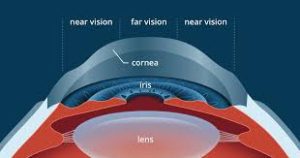
The cornea is a living tissue, and its healing response varies from person to person. Some patients develop a mild epithelial haze or subtle stromal remodelling that temporarily affects optical clarity. This is different from the flap itself — it involves the deeper tissue layers responding to the ablation. In most cases, it resolves on its own. Post-operative steroid drops (if still being used) or a short course of anti-inflammatory treatment can accelerate clearing. For a deeper understanding of how the cornea rebuilds itself, see our article on corneal healing after LASIK.
Flap-Related Issues
Flap complications are uncommon but can cause persistent blur. Micro-striae (tiny wrinkles in the flap), epithelial ingrowth (cells growing under the flap edge), or a slightly displaced flap can all degrade visual quality. These are usually visible on slit-lamp examination. If your surgeon suspects a flap issue, they may recommend a flap lift and re-positioning procedure. For context on what flap healing looks like week by week, our flap healing stages guide provides the full timeline.
Regression
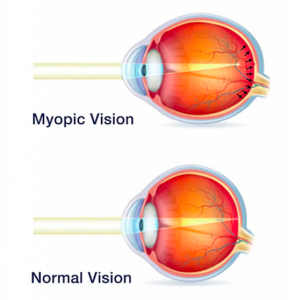
In a small percentage of patients, the cornea begins to steepen back toward its original shape — a process called myopic regression. This is more common in patients who had very high prescriptions corrected. At two months, it may be too early to distinguish genuine regression from normal settling. Serial refractions over the next few months will clarify whether the prescription is drifting. If regression is confirmed, an enhancement procedure can usually correct it once the cornea has stabilised. Our article on how to prevent regression covers the lifestyle and medication factors that influence long-term stability.
Higher-Order Aberrations
LASIK can sometimes introduce or unmask higher-order aberrations — optical imperfections beyond simple sphere and cylinder that cause symptoms like starbursts, halos, or general “soft” vision. These are more noticeable at night or in dim lighting. A detailed corneal topography and wavefront analysis can quantify these aberrations and determine whether they are clinically significant or likely to improve as the cornea continues to heal.
What Your Surgeon Checks at the Two-Month Follow-Up
A comprehensive post-LASIK evaluation at this stage typically includes a current refraction (to measure any residual prescription), a slit-lamp examination of the flap and corneal surface, tear film assessment (including tear break-up time and possible staining with fluorescein), corneal topography to evaluate shape and regularity, and wavefront aberrometry if visual quality complaints do not match the standard refraction findings.
Your surgeon will also ask about the pattern of your symptoms: Is the blur constant or intermittent? Does it affect one eye more than the other? Is it worse at distance, near, or both? Is it better after blinking or using drops? These details help narrow down the cause quickly. If you have noticed that screens in particular look blurry while other tasks are fine, that strongly suggests dry eye or accommodation fatigue rather than a refractive miss.
How Each Cause Is Treated
For Dry Eye
Aggressive lubrication with preservative-free drops (four to six times daily, not just “as needed”), warm compresses, omega-3 supplementation, and limiting air-conditioned or low-humidity exposure. In more severe cases, your surgeon may prescribe cyclosporine or lifitegrast drops, or recommend punctal plugs to reduce tear drainage. Patients who found their dryness persisted well beyond the early weeks can explore our detailed guide on treating post-LASIK dry eye.
For Residual Refractive Error
If the residual error is mild and still changing, the approach is watchful waiting — recheck in four to six weeks. If the prescription stabilises at a level that meaningfully affects your vision (typically greater than or equal to -0.75 D), a LASIK enhancement can be performed once sufficient time has passed. The enhancement involves lifting the original flap and applying a small additional laser correction.
For Corneal or Flap Issues
Epithelial ingrowth may require a flap lift to remove the cells. Striae may need the flap to be smoothed and repositioned. These are minor outpatient procedures performed under the same topical anaesthesia as the original LASIK. Post-operative recovery is usually faster than the primary surgery.
For Regression
Confirmed regression is managed with an enhancement procedure once the prescription is stable for at least three consecutive months. In the interim, temporary glasses or contact lenses can bridge the gap.
When to Be Concerned — Red Flags
Most causes of blurry vision at two months are benign and treatable. However, certain symptoms warrant urgent attention: sudden worsening of vision (not gradual), significant eye pain (not mild dryness discomfort), increasing redness or discharge, seeing a grey or dark shadow in your peripheral vision, or worsening glare and halos that interfere with night driving. If you experience any of these, contact your eye care provider promptly. Sudden vision changes can indicate diffuse lamellar keratitis or other complications that require immediate treatment. For a broader checklist of post-LASIK warning signs, see our article on why regular follow-ups matter.
Conclusion
Blurry vision two months after LASIK is not unusual, but it should not be dismissed. The most common cause — dry eye — is highly treatable with consistent lubrication and, if needed, prescription drops. A small residual prescription may still be settling at this stage and often resolves on its own. Flap issues, regression, and higher-order aberrations are less common but identifiable through a thorough follow-up examination. The key is accurate diagnosis: once your surgeon knows exactly what is causing the blur, the treatment is usually straightforward. If your vision has not met your expectations at two months, schedule an evaluation at Visual Aids Centre — the sooner the cause is identified, the sooner it can be addressed.
Frequently Asked Questions (FAQs)
Is it normal to have blurry vision 2 months after LASIK?
Mild, intermittent blur can fall within the normal healing window for some patients. However, persistent or worsening blur at eight weeks should be evaluated by your surgeon to rule out specific causes like dry eye or residual refractive error.
Will the blurry vision go away on its own?
In many cases, yes — especially if the cause is dry eye or ongoing corneal remodelling. Vision typically continues to stabilise for up to three to six months. If it is not improving by month three, your surgeon may recommend targeted treatment.
Can dry eye really cause blurry vision?
Absolutely. An unstable tear film creates micro-irregularities on the corneal surface that scatter light and reduce visual clarity. This is why blur from dry eye often fluctuates, clearing temporarily after blinking or using drops.
When is a LASIK enhancement considered?
Typically not until six to twelve months post-surgery, once the prescription has fully stabilised. An enhancement involves lifting the original flap and applying a small additional correction to address any residual error.
Could blurry vision at two months mean my LASIK failed?
No. LASIK failure is extremely rare. Persistent blur at two months usually has a specific, treatable cause. Over 96% of patients eventually achieve 6/6 (20/20) vision or better after any necessary adjustments.
Should I stop using eye drops if my eyes don’t feel dry?
Not necessarily. Corneal nerve disruption means your eyes may not signal dryness even when the tear film is unstable. Continue using preservative-free drops as directed for at least three months post-LASIK, or until your surgeon advises otherwise.
👁️ MEDICALLY REVIEWED BY
Padmashree Dr. Vipin Buckshey
Optometrist & Post-Operative Recovery Specialist | AIIMS Graduate, 1977 | Padma Shri Honouree
With more than four decades of clinical experience and over 250,000 laser vision correction procedures performed at Visual Aids Centre, Dr. Vipin Buckshey has managed thousands of patients through complex post-LASIK recovery scenarios — including persistent blur, dry eye management, and enhancement evaluations. An AIIMS alumnus, former President of the Indian Optometric Association, and official optometrist to the President of India, Dr. Buckshey personally reviews every case where vision has not met expectations to ensure the most effective pathway to clear sight. See our clinical achievements.