After investing in LASIK eye surgery, one worry surfaces in almost every patient’s mind at some point: will my number come back? It is a reasonable question, and the internet is full of contradictory answers — some reassuring, some alarming. Here is the honest, evidence-based version from Visual Aids Centre.
Your number — your refractive prescription — does not just “come back” randomly. LASIK permanently reshapes your cornea, and that reshaping does not reverse on its own. However, three distinct things can make your vision feel less sharp years after surgery, and only one of them is what clinicians call true regression. The other two are natural age-related changes that would have happened whether you had LASIK or not. This guide explains all three, tells you which affect you and which do not, and covers what to do if your vision shifts down the line.
Key Takeaways
- True LASIK regression — where the original refractive error partially returns — affects fewer than 5% of patients and is usually mild (–0.25 to –0.75 D).
- Presbyopia after 40 and early cataract formation are natural age-related changes that affect vision but are unrelated to LASIK.
- High pre-operative prescriptions (above –6.00 D) carry a slightly higher risk of regression than mild-to-moderate corrections.
- If your number does return meaningfully, enhancement procedures, glasses for occasional use, or ICL are all viable options.
Three Reasons Your Vision Might Change After LASIK
Patients who say “my number came back” after LASIK are almost always describing one of three phenomena, and the distinction matters because treatment differs for each.
The first is true refractive regression — the cornea settling into a slightly different curvature than the laser originally produced, reintroducing a small prescription. This is LASIK-related and uncommon. The second is presbyopia — the age-related stiffening of the eye’s natural crystalline lens that affects near vision from your 40s onward. This has nothing to do with LASIK; it would have happened regardless. The third is lenticular change — the eye’s internal lens gradually changing shape or density with age, eventually progressing to cataract. Again, unrelated to your surgery.
Most patients who worry about their number returning actually fall into categories two or three, where the LASIK result itself is completely intact but other parts of the eye have aged. Understanding what actually causes regression versus what does not is the first step in interpreting any vision change you notice.
True Regression — The Cornea Reshaping
This is the phenomenon patients usually have in mind when they ask whether their number will return. After LASIK, the cornea’s biomechanical response to laser ablation can result in a gradual, minor re-steepening of the central cornea. The net effect is a small amount of myopia returning — typically between –0.25 and –0.75 dioptres — over a period of months to years post-surgery.
True regression affects fewer than 5% of patients based on long-term outcome data. It is most common in the first 6–12 months as the cornea finalises its remodelling, and then stabilises. In very rare cases it continues beyond that window. Importantly, regression is not a “return to your original prescription” — it is a partial re-emergence of a fraction of your former prescription. A patient who started at –6.00 D and has full correction after LASIK may find themselves at –0.50 D three years later. That is regression. Going back to –6.00 D does not happen.
Presbyopia — The Age-40 Shift
Presbyopia is the single most common reason LASIK patients in their 40s feel like their vision is “changing.” It has nothing to do with LASIK and everything to do with the crystalline lens inside your eye gradually losing its flexibility.
In your 20s and 30s, this lens changes shape effortlessly to focus on near objects — reading a phone, a book, a menu. From the mid-40s onward, the lens stiffens, and near focus becomes progressively harder. Patients who had LASIK at 30 often reach 45 and suddenly need reading glasses — not because their LASIK has “worn off” but because of this completely separate biological change. Our detailed guide on correcting presbyopia after LASIK covers the options, including monovision and multifocal intraocular lens implants.
Other Natural Changes to Your Eyes
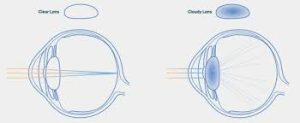
A few other biological changes can affect your vision independently of your LASIK surgery. Cataract formation typically begins in the late 50s or 60s, when proteins in the crystalline lens cloud gradually. This can cause blurry vision decades after LASIK, but again, it is not regression — it is an entirely separate condition that needs cataract surgery to resolve.
Lens sclerosis (hardening of the natural lens) can also shift your refractive state slightly before full cataract develops, sometimes temporarily improving near vision and sometimes worsening distance vision. These shifts typically appear from the late 50s onward and are part of normal ageing, not a reversal of your LASIK correction.
Who Is at Higher Risk of Regression?
Several pre-operative factors meaningfully increase the likelihood of true regression. Patients with very high pre-op prescriptions (above –6.00 D of myopia or above +3.00 D of hyperopia) have regression rates roughly twice that of mild-to-moderate corrections. Younger patients under 21 are more likely to experience regression because their eyes may not have reached full refractive stability — which is why surgeons require documented stability for at least 12 months before surgery.
Patients with thinner corneas sometimes show more regression because the biomechanical response of the corneal tissue is more pronounced. And patients who do not control post-operative habits — especially heavy screen users or those with chronic untreated dry eye — may experience minor fluctuation in their refractive state. The importance of refractive stability before surgery cannot be overstated.
How to Protect Your LASIK Result Long-Term
While you cannot eliminate regression risk entirely, several habits meaningfully reduce it. Follow your post-op drop regimen to the letter — incomplete inflammation control in the early weeks can promote aggressive corneal remodelling. Take structured screen breaks to avoid eye strain, which some evidence links to minor refractive drift. Protect your eyes from UV exposure with sunglasses, particularly during outdoor work or sports. Attend all scheduled follow-ups for the first year — these visits catch early regression when enhancement windows are still available. Our article on preventing regression covers the evidence behind each of these.
Treatment Options If Your Number Does Return
If regression is detected and bothering you, several options exist. LASIK enhancement is the most common solution — a touch-up laser procedure that re-corrects the small residual prescription. It is typically possible if your corneal thickness remains adequate, usually 12 months or more after the primary surgery. For patients with presbyopia, reading glasses or monovision correction are the cleaner solutions. For those whose cornea cannot accommodate further tissue removal, an ICL may be an option.
Conclusion
Your number does not “come back” in the dramatic way many patients fear. True regression affects under 5% of LASIK patients and typically produces only mild residual error. Most vision changes noticed years after LASIK are natural age-related phenomena — presbyopia, lens sclerosis, cataract — not a reversal of the surgery itself. If you are considering LASIK eye surgery in Delhi or already had surgery and want to understand a recent vision change, book a consultation at Visual Aids Centre for a thorough refractive and ocular health assessment.
Frequently Asked Questions (FAQs)
Can my original eye number fully come back after LASIK?
No. LASIK permanently reshapes the cornea, and the full original prescription does not return. What can return is a small fraction (typically –0.25 to –0.75 D) in under 5% of patients.
Why does my vision feel blurry 5 years after LASIK?
The most common cause is presbyopia — age-related near vision change that has nothing to do with LASIK. True regression is much rarer. A thorough exam distinguishes between the two.
Is regression more common with high prescriptions?
Yes. Patients with pre-op myopia above –6.00 D or hyperopia above +3.00 D have roughly double the regression rate of mild-to-moderate prescriptions. Corneal thickness and age also play roles.
Can LASIK enhancement fix returned vision?
Yes, in most cases. A touch-up laser procedure can re-correct small residual prescriptions, provided your corneal thickness allows further tissue removal. This is usually possible 12 months after primary surgery.
Is reading glasses after 40 a sign my LASIK failed?
No. Needing reading glasses after 40 is presbyopia — a normal age-related change that happens to everyone regardless of LASIK. Your distance correction from LASIK is still intact.
How can I tell if my vision change is regression or ageing?
A refractive assessment with your surgeon will identify the cause precisely. Regression shows up as a small myopic shift; presbyopia affects near vision while distance remains clear; cataract causes general blurring with glare and reduced contrast.
✍️ REVIEWED FOR CLINICAL ACCURACY
Dr. Vipin Buckshey — Padma Shri
Regression Assessment & LASIK Enhancement Planning | AIIMS, New Delhi (1977) | Former President, Indian Optometric Association
Dr. Buckshey has cared for patients from their first LASIK consultation through 20, 25, even 30 years of follow-up at Visual Aids Centre — a vantage point very few practitioners in India hold. That long view is exactly what is needed when a patient walks back in years later saying “my number has come back.” Separating a small genuine regression from the onset of presbyopia, from early lens opacity, from a simple refractive re-check artefact, is clinical judgement built over 250,000+ procedures and countless returning patients. Officially designated optometrist to the President of India and honoured with the Padma Shri for his contribution to Indian eye care, Dr. Buckshey still personally reviews complex enhancement cases at the centre. Read how the clinic was founded.