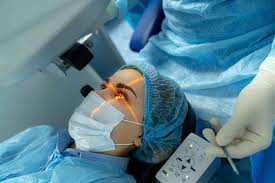

No — you don’t need to stay in a dark room after LASIK.
Your rod photoreceptors fully dark-adapt within about 40 minutes and become dramatically more light-sensitive in the process, which is exactly why sitting in total darkness after LASIK can backfire — when you finally step back into normal light, that heightened sensitivity collides with your healing cornea and makes the glare feel far worse than if you’d never gone fully dark in the first place.
Key Takeaways
- You don’t need a dark room — soft, ambient indoor lighting is fine, and may help your eyes recover more naturally.
- Light sensitivity in the first 24–48 hours is normal — it comes from temporary nerve exposure at the corneal flap, not damage.
- Extended darkness can physiologically backfire — your eyes fully dark-adapt in around 40 minutes, making the return to normal light feel disproportionately harsh.
- Harsh, direct light matters more than moderate indoor light — bright sunlight and glare are what to actually avoid early on.
- Worsening symptoms, not just discomfort, are the real warning sign — persistent pain or vision loss needs a call to your surgeon.
The Facts, Verified
What’s actually happening in your eyes during recovery — not just the standard “avoid bright light” advice.
| Verified fact | Why it matters for you |
|---|---|
| Light sensitivity after LASIK typically comes from temporary nerve exposure at the flap site, not lasting damage | Explains why it’s uncomfortable but expected, not a sign something went wrong |
| Rod photoreceptors reach full dark adaptation in about 40 minutes, with sensitivity rising sharply in that window | The physiological reason extended darkness can make re-exposure to normal light feel worse, not better |
| Corneal nerve density keeps recovering for months after LASIK, often continuing for up to a year or two | Explains why some residual light sensitivity can linger well past the first week for a minority of patients |
| Most acute symptoms — sensitivity, dryness, glare — meaningfully improve within the first week | Sets a realistic recovery timeline so you know what’s normal versus worth flagging |
| UV-related corneal haze is a documented risk after surface procedures (PRK, LASEK) but far less of a concern after LASIK, since the flap preserves the epithelium and Bowman’s membrane | Explains why LASIK patients don’t need PRK-level fear of light or sun exposure |
Sources: clinical literature on corneal nerve regeneration after LASIK; visual physiology research on dark and light adaptation.
Why Does Light Feel So Uncomfortable After LASIK?
During LASIK, your surgeon creates a thin corneal flap, which temporarily disrupts the nerve fibers responsible for normal corneal sensation. Those nerves gauge light and touch — while irritated and healing, they tend to overreact, which produces photophobia in the first place. It’s expected, not a complication, and it’s usually most noticeable in the first 24–48 hours, improving steadily alongside other early symptoms like dryness and mild glare.
Can Staying in a Dark Room Actually Backfire?
Yes, and here’s the mechanism most advice skips. Your eyes adapt to whatever light level they’re in — in darkness, rod photoreceptors ramp up sensitivity over roughly 40 minutes, reaching detection levels far beyond normal room lighting. That’s useful for genuine darkness, but it means the longer you sit in a dark room, the more sensitized your eyes become overall.
Combine that heightened baseline with corneal nerves already irritated from surgery, and stepping back into ordinary light can feel like a much bigger jolt than if you’d stayed in moderate, ambient light the whole time. Gradual exposure lets your eyes recalibrate steadily instead of swinging between extremes.
Why Doesn’t LASIK Need the Same Light Caution as PRK?
This is a distinction most generic “avoid light after eye surgery” advice glosses over. Corneal haze — a real healing complication UV exposure can worsen — is a documented risk after surface procedures like PRK and LASEK, which remove the corneal epithelium and Bowman’s membrane to reshape the surface directly. LASIK works differently: the flap preserves both layers, limiting the excessive wound-healing response UV exposure can trigger in surface ablation. That’s an anatomical reason, not just general caution, why LASIK patients don’t need PRK-level fear of light or sun — moderate sun protection is still smart, but the underlying healing risk is genuinely lower.
How Much Light Exposure Is Actually Safe in the First Few Days?
Moderate, indirect light is fine — what actually needs avoiding is harsh, direct light. A practical way to think about it:
- Indoors: soft, ambient lighting is comfortable and safe; skip harsh overhead fluorescents or anything glaring.
- Outdoors: wear sunglasses with full UVA and UVB protection, even on cloudy days — this matters more than avoiding sunlight altogether. See how much sun exposure is actually fine and what kind of sunglasses actually help.
- Avoid: direct sun, bright unshaded windows, and glaring screens in the first day especially.
What About Screens, Phones, and TV?
Screens aren’t forbidden, but they add strain on already-sensitive eyes, so easing back in matters more than avoiding them. Keep sessions short the first 24–48 hours; once back to regular use, the 20-20-20 rule helps — every 20 minutes, look at something 20 feet away for 20 seconds. See when it’s safe to return to computer work, and whether a blue light filter is worth using.
What Else Actually Speeds Up Light-Sensitivity Recovery?
- Use prescribed lubricating drops regularly — dry, irritated eyes register light more intensely than hydrated ones.
- Rest your eyes deliberately, closing them for a few minutes several times a day.
- Keep your sleep environment normal, not blacked out — the same adaptation logic applies overnight too.
- Skip sunglasses indoors — wearing them in normal lighting can itself delay adaptation.
None of this is about hiding from light — it’s about giving your eyes what they need to recalibrate. See how much rest is typically needed after LASIK for a fuller timeline.
How Should You Handle Light Based on Your Symptoms?
| Your situation | What it actually means | What to do |
|---|---|---|
| Mild light sensitivity, improving day to day | ✅ Normal healing pattern | Use soft ambient light indoors, sunglasses outdoors, and ease back into screens |
| Sensitivity still noticeable after a week | ⚠️ Slower healing, not necessarily a problem | Keep following the same balanced routine and mention it at your follow-up |
| Sensitivity comes with ongoing dryness or glare at night | ⚠️ Common overlapping symptom cluster | Prioritize prescribed drops and review your recovery routine with your surgeon |
| Sensitivity worsening, or with pain, redness, or vision loss | ❌ Not typical healing | Contact your surgeon promptly rather than waiting it out |
Source: general post-LASIK symptom-monitoring guidance, applied to common patient situations.
When Should You Actually Worry?
Most light sensitivity is normal and temporary — but a few signs need attention rather than patience: severe or persistent pain, sensitivity getting worse instead of better, sudden vision loss or new blurring past the expected window, or infection signs like redness, swelling, or discharge. If it hasn’t budged after a few weeks, see long-term light sensitivity after LASIK, or our broader recovery guide for general pacing.
| Staying in a dark room | Balanced, moderate light exposure | |
|---|---|---|
| Effect on eye sensitivity | Increases it — full dark adaptation raises light sensitivity | Keeps it stable — eyes never swing to extreme sensitivity |
| Re-exposure to normal light | Feels harsher, more uncomfortable | Feels manageable, since eyes never fully dark-adapted |
| Healing support | No added benefit | Supports normal visual adjustment |
| Recommended? | No | Yes — this is the better default |
Source: visual adaptation physiology applied to typical post-LASIK guidance.
Bottom Line
You don’t need to hide in a dark room after LASIK — moderate, soft light indoors and sun protection outdoors is the better approach, and it’s actually supported by how your eyes physiologically adapt to light. Some sensitivity in the first days is expected and temporary. Reach out to our team if your symptoms aren’t following the pattern described here.
FAQs
Should I stay in a dark room after LASIK?
No — moderate, soft light exposure is fine, and it may even help your eyes adjust faster than staying in total darkness.
Why are my eyes so sensitive to light after LASIK?
Temporary nerve exposure and irritation from the corneal flap, not lasting damage — it typically eases within the first week.
Can too much time in darkness make light sensitivity worse?
Yes — your eyes fully dark-adapt in around 40 minutes, so returning to normal light afterward can feel disproportionately harsh.
When can I use my phone or watch TV after LASIK?
Most surgeons suggest minimal screen use for the first day, then easing back in with breaks using the 20-20-20 rule.
Do I need sunglasses indoors after LASIK?
Not usually — soft ambient indoor lighting is comfortable without sunglasses; they matter most outdoors in direct sun.
When should I worry about light sensitivity after LASIK?
If it worsens instead of improving, or comes with severe pain, vision loss, or signs of infection — contact your surgeon promptly.
👁️ MEDICALLY REVIEWED BY
Padmashree Dr. Vipin Buckshey
Optometrist & Laser Vision Correction Specialist | AIIMS Graduate, 1977 | Padma Shri Honouree | Official Optometrist to the President of India | Former President, Indian Optometric Association | Founder, Visual Aids Centre
Patients often default to hiding from light after LASIK out of caution, and it deserves a precise answer rather than a blanket “avoid it” instruction. Dr. Vipin Buckshey founded Visual Aids Centre in 1980, and in 1999 it became the first eye centre in Delhi to introduce LASIK. The centre reports over 250,000 Laser Vision Correction procedures to date. This article reflects current clinical understanding of post-LASIK light sensitivity and is general information rather than medical advice — if your symptoms feel unusual or are getting worse, contact your surgeon directly rather than waiting for your next follow-up. Read more at our story.