
No — laser eye surgery itself does not cause seizures.
The excimer laser used in LASIK pulses up to 1,050 times a second — so far above the 5–30 Hz range known to trigger photosensitive epilepsy that your eye can’t even register it as flickering, which is why what sometimes looks like a “seizure” during a procedure is almost always a brief fainting response to stress, not a neurological event caused by the laser.
Key Takeaways
- LASIK’s laser isn’t strobe-like — it doesn’t produce the flickering visual pattern that triggers photosensitive epilepsy.
- Photosensitive epilepsy affects only about 3% of people with epilepsy — and even then, LASIK’s light doesn’t match known triggers.
- What sometimes looks like a “seizure” during a procedure is usually convulsive syncope — a documented fainting response to stress or pain, not an epileptic event.
- The sedatives commonly used for LASIK anxiety are typically anticonvulsant, meaning they reduce seizure risk rather than raise it.
- Epilepsy generally isn’t a contraindication for LASIK — it’s a reason for extra pre-op coordination with your neurologist, not automatic disqualification.
The Facts, Verified
What the actual mechanisms show — not the string of “theoretically could” language most pages rely on.
| Verified fact | Why it matters for you |
|---|---|
| LASIK’s excimer/femtosecond laser doesn’t produce the flickering visual pattern linked to photosensitive epilepsy | The light itself isn’t the kind of trigger this concern usually points to |
| Photosensitive epilepsy affects roughly 3% of people who have epilepsy at all | Even within the epilepsy population, this is a minority concern, not the default |
| Convulsive syncope — fainting with brief, jerking movements — is a documented complication of outpatient procedures generally, triggered by pain, anxiety, or stress | A far more likely explanation for any “seizure-like” event during a procedure than epilepsy being triggered |
| Sedatives commonly used for procedural anxiety, such as benzodiazepines, are typically anticonvulsant — used clinically to treat seizures, not cause them | Directly corrects a common assumption that sedation raises seizure risk |
Sources: photosensitive epilepsy clinical literature; convulsive syncope case-series research; standard anticonvulsant pharmacology.
Does the LASIK Laser Actually Trigger Photosensitive Epilepsy?
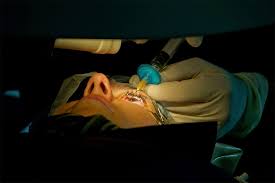
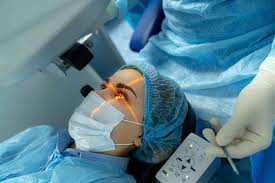
This is the concern most pages raise without actually checking it. Photosensitive epilepsy is triggered by flickering light or rapidly changing visual patterns — the kind seen in strobe lighting or certain video content. LASIK’s laser doesn’t produce that; it’s a controlled beam reshaping your cornea while you focus on a single steady fixation light, not a flashing stimulus. Photosensitive epilepsy itself affects only around 3% of people with epilepsy, so for most patients this mechanism doesn’t even apply in the first place — but the section below shows exactly why it doesn’t apply to LASIK specifically, either.
How Does the LASIK Laser’s Actual Speed Compare to a Seizure Trigger?
This is the number most pages skip entirely. Photosensitive epilepsy is triggered by light flickering within a specific 5–30 Hz range — flashing reliably faster or slower than that window isn’t a recognised trigger. Measured against that range, modern refractive lasers aren’t in the same order of magnitude.
| Light source | Speed | Relevance |
|---|---|---|
| Photosensitive epilepsy trigger window | 5–30 Hz | The flash rate flashing light needs to fall within to pose a seizure risk |
| Human flicker-fusion threshold | ~50–90 Hz | Above this speed, the eye perceives flicker as steady light, not flashing |
| Excimer laser (corneal reshaping) | Up to 1,050 Hz | Roughly 35x above the trigger window’s upper bound |
| Femtosecond laser (flap/lenticule creation) | Up to 2,000,000 Hz | Tens of thousands of times faster than anything linked to photosensitive seizures |
Sources: Epilepsy Foundation photosensitivity guidance; published excimer and femtosecond laser repetition-rate specifications.
In practice, you won’t perceive either laser as flickering at all. Both pulse so far past the speed at which the human eye stops registering individual flashes that what you actually see is your fixation light, held steady, while the reshaping happens beneath your line of sight.
What’s Actually Happening When Someone “Seizes” During a Procedure?
Almost certainly not a seizure at all. Convulsive syncope is a well-documented fainting response — patients briefly lose consciousness and may show a few jerking movements, triggered by pain, fear, or intense anxiety during outpatient procedures. It resolves quickly, and it’s mechanically unrelated to epilepsy: it’s a drop in blood flow to the brain, not abnormal electrical activity. The physiological response most likely to produce something that looks alarming during LASIK is fainting, not a laser-triggered neurological event.
Do the Sedatives Used for LASIK Increase Seizure Risk?
No — if anything, it’s the opposite. Many patients are offered a mild sedative before LASIK to manage anxiety, and the medications typically used for this, such as benzodiazepines, are anticonvulsant: they’re used in emergency medicine specifically to stop active seizures. Being sedated for your procedure doesn’t add seizure risk on top of your baseline — it works against it.
As with any medication, individual allergic reactions are possible, which is why disclosing your full medical history matters — see how to prepare for your consultation and what to flag if you have allergies.
How Can You Lower Your Chances of Feeling Faint?
Since convulsive syncope, not seizure, is the real risk worth managing, the practical steps are straightforward:
- Eat a light meal beforehand — low blood sugar makes fainting more likely under any stress.
- Stay hydrated in the hours before your procedure, not just the day of.
- Say so if you’re anxious — your surgical team can adjust pacing and explain each step as it happens, which measurably reduces procedural fainting.
- Avoid standing up too quickly right after the procedure, since that’s a separate, common fainting trigger on its own.
None of this is about preventing a seizure — it’s about preventing the far more likely event that sometimes gets mistaken for one.
Who Actually Needs Extra Precautions?
| Your situation | What it actually means | What to do |
|---|---|---|
| No seizure history, general pre-surgery nerves | ✅ Normal anxiety, not a seizure risk | Standard consultation and prep is enough |
| Well-controlled epilepsy, no photosensitive component | ⚠️ Extra coordination, not disqualification | Share your neurologist’s input with your surgeon |
| Photosensitive epilepsy specifically | ⚠️ Worth a direct conversation | Confirm with your surgeon and neurologist beforehand, even though LASIK’s light isn’t a typical trigger |
| Poorly controlled, active neurological condition | ❌ Needs medical clearance first | Address stabilization with your neurologist before considering surgery |
Source: general pre-refractive-surgery neurological screening guidance, applied to common patient situations.
Is LASIK Safe If You Have Epilepsy?
For most people, yes. Reputable clinics generally don’t treat epilepsy as an automatic disqualifier — it’s a reason for a more thorough consultation, not a closed door. See our dedicated guide on LASIK and epilepsy specifically for what that screening actually looks like, and what to ask at your consultation if you want to raise it directly.
If migraines are part of your picture rather than epilepsy, that’s a related but separate conversation — see how LASIK and migraines actually connect. And if your surgeon does advise against LASIK specifically, that’s not the end of the road — see who else this applies to.
| Convulsive syncope | Epileptic seizure | |
|---|---|---|
| Underlying cause | Temporary drop in blood flow to the brain | Abnormal electrical activity in the brain |
| Common trigger | Pain, fear, anxiety, standing too long | Varies — light, sleep loss, missed medication, and more |
| Typical duration | Under a minute, rapid recovery | Variable, often followed by confusion |
| Relevance to LASIK | The more likely explanation for any “seizure-like” moment | Not caused by the laser itself |
Source: convulsive syncope and epileptic seizure clinical differentiation literature.
Bottom Line
Laser eye surgery doesn’t cause seizures — the laser itself isn’t a photosensitive trigger, and what occasionally gets mistaken for one is far more likely to be a brief fainting response to stress, not a neurological event. Epilepsy, including the photosensitive type, generally isn’t a reason to rule out LASIK on its own. Reach out to our team to discuss your specific medical history before your consultation.
FAQs
Can LASIK’s laser trigger a seizure?
No — it doesn’t produce the flickering light pattern associated with photosensitive epilepsy triggers.
What actually happens if someone “seizes” during eye surgery?
It’s most often convulsive syncope, a brief fainting response to stress or pain, not an epileptic seizure caused by the procedure.
Do LASIK sedatives increase seizure risk?
No — the sedatives typically used are anticonvulsant, meaning they reduce seizure risk rather than raise it.
Can people with epilepsy get LASIK?
Usually yes, with coordination between your surgeon and neurologist — epilepsy alone generally isn’t a disqualifier.
Is photosensitive epilepsy common?
No — it affects roughly 3% of people who have epilepsy, and LASIK’s light doesn’t match its known triggers anyway.
What if my surgeon advises against LASIK for neurological reasons?
Alternatives like Trans-PRK exist, and your surgeon can guide you toward the option that fits your medical history.
👁️ MEDICALLY REVIEWED BY
Padmashree Dr. Vipin Buckshey
Optometrist & Laser Vision Correction Specialist | AIIMS Graduate, 1977 | Padma Shri Honouree | Official Optometrist to the President of India | Former President, Indian Optometric Association | Founder, Visual Aids Centre
Patients occasionally ask about this out of genuine caution, and it deserves a precise answer rather than a list of vague “theoretically possible” scenarios. Dr. Vipin Buckshey founded Visual Aids Centre in 1980, and in 1999 it became the first eye centre in Delhi to introduce LASIK. The centre reports over 250,000 Laser Vision Correction procedures to date. This article reflects current clinical understanding of seizure and syncope mechanisms and is general information rather than medical advice — if you have epilepsy or another neurological condition, your neurologist and surgeon’s joint evaluation always takes priority. Read more at our story.