No — LASIK does not make your eyes physically bigger. The surgery reshapes your cornea to correct how light focuses on the retina. It does not touch the iris, the whites of the eye, the eyelids, or any structure that determines actual eye size.
That said, plenty of LASIK patients genuinely notice their eyes look different afterwards. Sometimes more open. Sometimes larger. Occasionally people around them comment on it. There are real reasons for this — they are just perceptual rather than anatomical. This article explains what actually changes, why it happens, and what you should know before deciding whether LASIK is right for you.
💡 Quick Highlights
- LASIK changes corneal shape only — eye size, iris diameter, and eyelid anatomy are unchanged.
- Thick corrective lenses distort how eyes appear in glasses. Removing that distortion can make eyes look noticeably different after surgery.
- Reduced squinting and a more relaxed eyelid position are the two most common reasons patients feel their eyes look more open post-LASIK.
- Any change in appearance is a side effect of better vision — not a cosmetic outcome LASIK is designed to create.
In This Article
What LASIK Does — and Doesn’t — Change
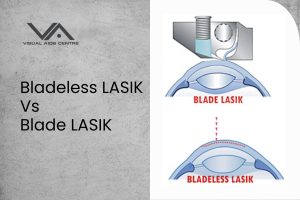
LASIK works on the cornea — the transparent dome at the very front of the eye. A femtosecond laser creates a thin flap in the outer corneal layer, an excimer laser removes a precisely calculated volume of tissue underneath, and the flap is repositioned. The whole process takes around 10 to 15 minutes per eye. You are awake throughout, under topical anaesthetic drops only.
What this changes: the corneal curvature, and therefore how light bends as it enters the eye. Myopia, hyperopia, and astigmatism are all caused by refractive errors — light landing in front of, behind, or unevenly on the retina. LASIK corrects the bending so light hits the retina accurately.
What this does not change: the diameter of the iris, the size of the pupil at rest, the length of the eye, the position or structure of the eyelids, or any of the orbital anatomy that determines how an eye looks from the outside. Some patients ask whether their eyes are dilated during LASIK — they are, for the pre-operative assessment and measurements, but dilation is temporary and has no lasting effect on how eyes look.
Why Eyes Can Look Different After LASIK
Three things account for nearly all of the appearance changes patients notice. None of them are structural changes to the eye.
Thick Lenses Distort How Eyes Look in Glasses
This is the biggest one. Glasses for myopia (short-sightedness) use concave lenses — they are thicker at the edges and thinner in the centre. This lens shape creates a minification effect: eyes behind strong myopic lenses appear noticeably smaller than they really are. The higher the prescription, the more pronounced the effect.
Hyperopic (long-sighted) lenses work the opposite way — convex, thicker in the middle — and create a magnification effect that makes eyes look larger and more prominent than they are.
After LASIK, neither effect is present. Eyes are seen without that optical distortion for the first time in years. For someone who has worn a high myopic prescription since childhood, the sudden visibility of their natural eye size can feel dramatic — even though nothing about the eye itself has changed.
Less Squinting Means a More Open Resting Expression
Uncorrected myopia makes distant objects blurry. The instinctive response is to squint — partially closing the eyes to narrow the light aperture and temporarily sharpen the image. People who have done this habitually for years do not always realise how much it has become their resting facial expression.
After LASIK, when distance vision is corrected, the squinting stops. The eyes return to a more naturally open position. The change in expression is real — it is just muscle and habit, not anatomy.
Glasses Frames Affect Eyelid Position
Frames sit across the nose and rest against the temples. Over time, many glasses wearers unconsciously adjust their brow position and eyelid height to keep frames in place or to look through the optical centre of the lens correctly. Without frames, these compensatory adjustments disappear. The eyebrows settle lower, or the upper lid rests differently — small changes that collectively alter how the eye area looks in photographs and in person.
Setting Realistic Expectations About Appearance
If you are hoping LASIK will make your eyes look dramatically different, it probably will not deliver that. The changes described above are real but subtle — and they depend heavily on how strong your pre-operative prescription was. Someone corrected from -1.50 D will notice far less perceptual difference than someone going from -7.00 D to uncorrected vision.
One thing patients do not always anticipate: some visual quality changes after LASIK can affect how the eyes appear in certain lighting. Higher-order optical aberrations — the subtle imperfections that laser correction can introduce or alter in the corneal optics — sometimes cause increased halos and starbursts around light sources, particularly at night. This is usually temporary but worth understanding in advance. Our article on higher-order aberrations after LASIK covers what these are and how long they typically last.
The clearer and more consistent benefit most patients report is not appearance — it is freedom. Not reaching for glasses in the morning. Not worrying about contacts drying out. Not losing a lens in the middle of a meal. For patients who wore glasses specifically for reading or distance tasks, the question of whether LASIK eliminates reading glasses is worth understanding before surgery, because the answer depends on age and the specific nature of the vision correction needed.
What to Know Before You Decide
LASIK is not right for everyone. A thorough pre-operative assessment at Visual Aids Centre includes corneal topography, pachymetry, wavefront analysis, and tear film evaluation — this is how candidacy is confirmed, not assumed. Minimum age is typically 18 to 21, with at least 12 months of stable prescription before surgery.
Most first-time LASIK candidates come in with questions that are partly clinical and partly practical. Whether laser eye surgery is painful is one of the most common — the honest answer is that it is uncomfortable but not painful; anaesthetic drops are used and the procedure itself takes under 15 minutes. Preparation matters too: the period before surgery has specific dos and don’ts that affect both safety and outcome. Our guide on the dos and don’ts before laser eye surgery covers everything from contact lens discontinuation timelines to what not to put on your face the morning of the procedure.
The appearance question — does LASIK change how my eyes look — is a reasonable one to ask. But the more clinically important questions are about corneal health, prescription stability, dry eye baseline, and whether LASIK or one of its flapless alternatives is the better fit for your eye profile and lifestyle. That is what a consultation is for.
Frequently Asked Questions
Does LASIK physically make your eyes bigger?
No. LASIK reshapes only the cornea — the clear dome at the front of the eye. It does not alter iris size, eyelid position, orbital anatomy, or any other structure that determines actual eye size. Any change in appearance is perceptual, not structural.
Why do some patients say their eyes look bigger after LASIK?
Three reasons: (1) Strong myopic lenses miniaturise eyes behind them — removing that optical distortion reveals the eye’s natural size. (2) Habitual squinting from uncorrected myopia creates a narrowed resting expression; after LASIK, squinting stops. (3) Glasses frames affect brow and eyelid position; without frames, the eye area looks more open.
Will I look different to other people after LASIK?
Possibly, depending on your prescription strength. Patients with high myopia (−5.00 D or above) often notice the most visible change in how they look without glasses, because strong lenses significantly distort how their eyes appear from the outside. People with lower prescriptions may notice little or no visible difference.
Can LASIK change the colour of my eyes?
No. Eye colour is determined by iris pigmentation, which LASIK does not affect. The procedure operates entirely on the corneal stroma, well in front of the iris.
Is LASIK a cosmetic procedure?
No — LASIK is a refractive surgery. Its purpose is vision correction, not aesthetic alteration. Any cosmetic-seeming changes in appearance (such as eyes looking more open) are a secondary perceptual effect of correcting vision and removing glasses, not a cosmetic surgical outcome.
Are there risks to the eye’s appearance from LASIK?
Temporary post-operative redness (subconjunctival haemorrhage) is common in the first week and resolves on its own. Some patients experience increased halos or glare around lights, particularly at night, during the first few months. These are visual quality effects rather than changes to eye appearance. Permanent cosmetic changes to how the eye looks are not a documented LASIK complication.
The appearance question comes up more often than surgeons might expect — usually from patients in their 20s and 30s who have worn strong prescriptions since school and are genuinely uncertain what they will look like without glasses. Dr. Buckshey’s practical note on this: the patients who are most satisfied post-LASIK are those who come in focused on how they will see, not how they will look. The visual freedom is real. The appearance change, if it happens, is a pleasant surprise — not something to plan around. About Dr. Buckshey and Visual Aids Centre.