It’s one of those questions that feels small but actually matters quite a lot for planning your LASIK day: will your eyes be dilated? The answer has two parts, and getting both right helps you prepare properly. Yes—your eyes will be dilated during your pre-operative consultation. No—they will not be dilated during the actual LASIK surgery. Understanding why dilation plays a role in one phase and not the other tells you something important about how LASIK candidacy is assessed and how the procedure itself works.
This article walks you through exactly what dilation involves, why it is part of the pre-LASIK examination, what happens to your eyes instead during surgery, and how to prepare for both appointments so neither catches you off guard.
Key Takeaways
- Eye dilation is a standard part of the LASIK pre-operative consultation—it allows your surgeon to examine the retina, optic nerve, and internal eye structures that cannot be seen through an undilated pupil.
- Your eyes are not dilated during the LASIK procedure itself. Numbing drops and a speculum are used instead to keep the eye open and comfortable.
- Dilation drops take 15–30 minutes to work and their effects last several hours—plan your consultation day accordingly and arrange a driver.
- Pupil size measured during dilation is one factor that influences LASIK eligibility and treatment planning, particularly for patients with larger pupils.
- After surgery, temporary blurriness and light sensitivity may feel similar to dilation—but these are caused by the healing cornea, not any drops.
What Eye Dilation Actually Is
Eye dilation refers to the process of artificially widening the pupil using specially formulated eye drops. In their resting state, pupils constrict in response to light—a protective reflex that also happens to limit how much of the internal eye a clinician can see. Dilation drops temporarily block this reflex, allowing the pupil to open fully and giving the surgeon a clear, unobstructed view of the retina, optic nerve, vitreous, and the peripheral structures of the eye.
In ordinary routine eye examinations, dilation is sometimes omitted if the patient is young and presenting with straightforward concerns. For a LASIK pre-operative workup, it is not optional—the assessment standards are considerably more detailed than a standard prescription check, and dilation is integral to completing them properly. The full scope of what a LASIK consultation process involves goes well beyond what most patients expect from a routine eye appointment.
Why Dilation Is Part of Your LASIK Pre-Op Exam
The pre-operative LASIK examination is one of the most comprehensive ophthalmic assessments a patient will ever receive. Dilation supports several distinct objectives within that workup.
Retinal and Optic Nerve Assessment
LASIK reshapes the cornea—it does not touch the retina. But retinal health is still a mandatory pre-operative consideration. Conditions including retinal thinning, lattice degeneration, holes, or early detachment must be identified and addressed before surgery proceeds. None of these can be reliably detected through an undilated pupil. This is also why retina check-ups are taken seriously not just before but also during the post-operative monitoring period.
Accurate Refractive Measurement
Dilation temporarily relaxes the ciliary muscle—the muscle responsible for the eye’s focusing (accommodation). This relaxation, called cycloplegia, allows the eye’s true underlying refractive error to be measured without the accommodative component masking or distorting the reading. In patients who habitually accommodate even when not trying to—particularly younger patients with higher degrees of myopia—the dilated refraction often differs meaningfully from the undilated measurement. Using the dilated measurement ensures the laser correction is calibrated against the eye’s genuine resting state, not an artificially accommodated one. This connects directly to why prescription stability matters so much before LASIK—and why accurately capturing the full, unaccommodated prescription is foundational to a good result.
Pupil Size Measurement
Pupil size—both in bright light and in dim or dark conditions—is a relevant variable in LASIK treatment planning. Patients with larger scotopic (low-light) pupils can be at higher risk of post-operative glare and halos, because the treated optical zone of the cornea may not fully cover the enlarged pupil in dim conditions. Dilation allows this measurement to be taken under conditions that approximate maximal pupil dilation, giving the surgeon the most conservative and informative reading.
Corneal Mapping and Structural Assessment
Detailed corneal topography and thickness measurements are central to LASIK candidacy. These tests examine how much tissue is available for safe ablation and whether the corneal surface has any irregularities that might affect outcomes. Understanding how the cornea is tested before LASIK helps explain why the pre-op appointment is so much more involved than a simple prescription update—and why arriving without sufficient time to allow for dilation is a problem.
Overall Ocular Surface Health
The health of the ocular surface—tear film quality, lid margin condition, meibomian gland function—influences both candidacy and post-operative comfort. These assessments are part of the comprehensive pre-operative workup alongside dilation. Our research-backed article on the influence of pre-operative ocular surface health on LASIK outcomes explains why this matters clinically.
What to Expect When Your Eyes Are Dilated
If you have never had your eyes dilated before, knowing what the experience feels like removes unnecessary anxiety on the day.
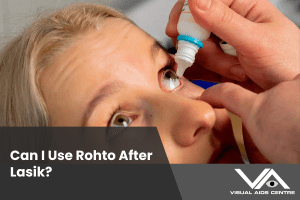
- The drops themselves. Dilation drops cause a mild, brief stinging sensation that typically passes within a few seconds. They are not painful.
- The wait. It takes approximately 15–30 minutes for the pupils to reach full dilation. During this window, you will notice your near vision becoming blurry—this is the ciliary muscle relaxing and is entirely expected.
- Light sensitivity. With the pupil fully open, significantly more light enters the eye than normal. Bright indoor lighting and sunlight will feel harsh and uncomfortable. Bringing good-quality sunglasses to your appointment is not optional—it is practical necessity.
- Duration of effects. Dilation effects typically last four to six hours, and sometimes longer depending on which drops were used and your individual response. Near vision blur may persist into the evening following a morning consultation. You will not be safe to drive during this period.
- Other pre-op tests. Beyond dilation, you should also be aware of what other preparations your surgeon requests. Some clinics ask patients to stop wearing contact lenses for a period before the consultation; others provide specific instructions about products and substances on the day. Our article on preparing for LASIK surgery consolidates the key pre-appointment instructions in one place.
What Happens Instead During LASIK Surgery
On your surgery day, the experience is quite different from the consultation. Dilation drops are not part of the surgical protocol—instead, two other interventions manage eye comfort and positioning.
Numbing Drops
Anaesthetic eye drops are applied several minutes before the procedure begins. These completely eliminate any sensation on the ocular surface, meaning you will feel pressure from the instruments but not pain. The drops work quickly and their effect is localised to the eye—you remain fully conscious and conversational throughout. Some surgeons also offer a mild oral sedative for patients with significant procedural anxiety; if this is relevant to you, ask at your pre-op consultation.
The Eye Speculum
A small, smooth instrument called a speculum is gently placed between the eyelids to hold them open for the duration of the laser treatment. This removes the concern about blinking at the wrong moment entirely. Many patients worry about this beforehand—but in practice, the numbing drops mean you feel little from the speculum itself, and the procedure is brief enough that discomfort is minimal. Our article addressing what happens if you move your eye during LASIK explains how modern eye-tracking technology built into the laser system handles any involuntary eye movement automatically—another common patient concern addressed before it becomes anxiety on the day. Similarly, if you have wondered what happens if you feel the urge to blink or flinch, our article on flinching during LASIK explains the safeguards in place.
The Laser Treatment
The actual laser application is brief—typically under 30 seconds per eye for the ablation phase. You will be asked to fixate on a blinking light. The temporary dimming or blackout of vision many patients experience during the suction phase is normal and lasts only seconds. Your surgeon will guide you verbally throughout the entire procedure, so you are never left wondering what is happening.
After Surgery: Why Your Vision May Feel Similar to Dilation
In the hours after LASIK, many patients notice symptoms that feel similar to dilation—blurry near vision, heightened light sensitivity, and difficulty in bright environments. These symptoms have a different cause: the cornea healing and the tear film temporarily unstable rather than any pharmacological effect. The distinction matters because the management is different.
Post-operative light sensitivity responds well to wearing protective goggles or shields immediately after surgery and quality sunglasses during daylight in the days that follow. Nighttime glare and halos—particularly around lights when driving—are also common in the first weeks. Understanding which lighting conditions are easiest on healing eyes can also help.
Practical Tips for Your Consultation and Surgery Day
- Arrange a driver for your consultation. After dilation, driving is not safe until your vision returns to normal—which can take most of the day. This is non-negotiable.
- Bring good sunglasses. Both for the post-dilation light sensitivity at your consultation and for the post-operative sensitivity after surgery, quality sunglasses make a meaningful practical difference.
- Know what to avoid beforehand. Certain substances affect ocular surface measurements and should be avoided before your pre-op assessment. Our article on pre-operative eye drop instructions cover specifics that are easy to overlook.
- Know what to wear on surgery day. There are practical considerations around clothing and accessories for the procedure that most patients don’t think about until the last minute.
- Check whether blood tests are required. At most LASIK centres, standard blood tests are not a routine requirement—but some clinical protocols include them.
- Follow post-op instructions exactly. The post-operative protocol—eye drops, sleep shields, activity restrictions—is designed around your cornea’s healing timeline.
Conclusion
To give you the clearest possible summary: yes, your eyes are dilated for LASIK—but only during the pre-operative consultation, not during surgery itself. Dilation at the consultation allows a thorough examination of your retinal health, accurate measurement of your prescription’s true baseline, assessment of your pupil size, and detailed mapping of your corneal architecture. During surgery, numbing drops and a speculum serve the practical roles that dilation is not needed for. After surgery, what may feel like dilation effects is simply the normal healing process—temporary, manageable, and predictable.
At Visual Aids Centre, our pre-operative assessment process is designed to gather every piece of information needed to make the LASIK procedure both safe and optimally personalised for each patient. If you’re ready to understand what your eligibility looks like—or simply want your questions answered before committing—book a consultation with our team.
Frequently Asked Questions (FAQs)
How long do dilated eyes last after a LASIK pre-op exam?
The effects of dilation drops typically last four to six hours, though some patients notice residual blurriness for longer depending on their individual response and the drops used. Our dedicated article on how long eyes stay dilated after LASIK eye surgery covers the timeline and what affects duration.
Can I drive myself home after my LASIK consultation?
No. After dilation, your near vision is temporarily blurred and your light sensitivity is significantly elevated—both make driving unsafe. Arrange for someone to drive you, or plan to wait at the clinic until the effects have fully resolved. This applies to the consultation day, not just surgery day.
Does pupil size affect LASIK eligibility?
Pupil size is a relevant factor in treatment planning. Patients with very large scotopic (low-light) pupils may be at higher risk of post-operative glare and halos in dim conditions. Modern lasers with expanded optical zones address this for most patients, but it is assessed individually.
Will I feel pain when the dilation drops are applied?
No. Dilation drops cause a brief, mild stinging sensation that typically passes within a few seconds. They are not painful. If you are particularly sensitive to eye drops, let the clinical team know in advance—they can make the application as comfortable as possible.
Why don’t surgeons dilate the eyes during LASIK itself?
Dilation is used to examine internal eye structures and measure the true resting refraction—neither of which is relevant during the procedure itself. During LASIK, the goals are entirely different: keeping the eye immobile, comfortable, and open. Numbing drops and a speculum achieve this without the side effects of dilation—blurred near vision and light sensitivity—which would be counterproductive on surgery day.
What is the difference between topography-guided and wavefront LASIK?
Both use the detailed corneal data collected during your pre-operative workup to personalise the laser treatment—but they analyse different aspects of your eye’s optics.
👁️ MEDICALLY REVIEWED BY
Padmashree Dr. Vipin Buckshey
Optometrist & Post-Operative Care Specialist | AIIMS Graduate, 1977 | Padma Shri Honouree
With more than four decades of clinical experience and over 250,000 laser vision correction procedures performed at Visual Aids Centre, Dr. Vipin Buckshey has overseen the pre-operative assessment protocols—including the dilation-based comprehensive eye examination—that underpin every LASIK candidacy decision made at the centre. An AIIMS alumnus, former President of the Indian Optometric Association, and official optometrist to the President of India, Dr. Buckshey personally reviews all clinical content at Visual Aids Centre to ensure it reflects current best practice and serves genuine patient understanding. Learn more about the centre’s clinical philosophy at our story.