This blog explores whether age 45 is too old for LASIK surgery and explains the medical, lifestyle, and practical considerations for mid-40s patients considering vision correction.
This article discusses LASIK suitability evaluation at 45, prescription stability requirements, corneal health assessment, presbyopia and monovision considerations, recovery timeline, age-related benefits and risks, alternative vision correction options, realistic expectations, and practical steps to determine candidacy.
Key Takeaways
- Age 45 is not automatically too old for LASIK; many mid-40s patients achieve excellent outcomes.
- Prescription stability, corneal health, and overall eye health are more important than age.
- Presbyopia (age-related near vision loss) may still require reading glasses post-LASIK.
- Monovision LASIK is a valuable option for patients experiencing presbyopia.
- Recovery timeline is similar to younger patients; realistic expectations ensure satisfaction.
Evaluating LASIK Suitability at 45
At age 45, LASIK candidates require a thorough and comprehensive evaluation to ensure safe and effective outcomes. Rather than focusing on chronological age, ophthalmologists assess multiple physiological and health factors that determine whether LASIK is appropriate for each individual patient.
Critical Evaluation Factors
Prescription Stability
Ideally, your prescription should be stable for at least 12 months before LASIK surgery. This stability is more important than age. Fluctuating vision—common when prescriptions are changing—increases the risk of regression after LASIK, where vision gradually returns toward pre-surgical measurements. A stable prescription ensures that the laser correction will hold steady long-term.
Corneal Health Assessment
Adequate corneal thickness is essential for safe laser reshaping. The surgeon removes a calculated amount of corneal tissue to reshape the cornea and correct refractive error. If your cornea is too thin, the procedure becomes risky. Conditions affecting corneal suitability include:
- Keratoconus (cone-shaped cornea)
- Corneal scarring from previous injury or infection
- Chronic dry eye affecting corneal health
- Thin corneas unsuitable for LASIK flap creation
These conditions may require alternative procedures like PRK (Photorefractive Keratectomy) or SMILE Pro, which don’t require corneal flap creation.
Ocular Health Evaluation
A comprehensive eye health assessment is essential:
- Early cataracts: Age-related lens clouding can affect post-LASIK vision clarity and may indicate refractive lens exchange is a better option
- Glaucoma: Must be stable and controlled before LASIK; elevated eye pressure affects candidacy
- Severe dry eyes: Can impact healing and post-operative comfort; may require pre-surgical treatment
- Retinal health: Peripheral retinal conditions must be assessed to ensure good visual outcomes
Why Age Alone Doesn’t Disqualify You
LASIK primarily corrects refractive errors—myopia (nearsightedness), hyperopia (farsightedness), and astigmatism. These conditions are not age-dependent. The procedure reshapes the cornea using an excimer laser, which works equally effectively in 45-year-old eyes as in 25-year-old eyes.
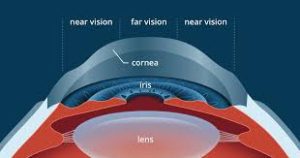
The primary age-related vision change at 45 is presbyopia—the natural loss of the eye’s ability to focus on near objects. This occurs because the lens becomes less flexible with age. LASIK cannot reverse presbyopia, but modern techniques like monovision LASIK can address it effectively.
Presbyopia and Monovision Solutions
Presbyopia typically begins around age 40-45 and progresses over time. While LASIK improves distance vision, presbyopia may still require reading glasses for fine print tasks. However, many surgeons now employ monovision LASIK as a solution:
Monovision LASIK: Corrects one eye (dominant eye) for distance vision and the other eye for near vision. This allows functional vision across all distances without glasses for most daily activities. Many patients find monovision highly effective for:
- Reading books, phones, and documents
- Computer work
- Distance driving and outdoor activities
- Overall independence from corrective lenses
Comprehensive Diagnostic Assessment
Your pre-operative evaluation includes several important diagnostic tests:
- Corneal topography: Maps the surface shape of your cornea to identify irregularities and assess laser reshaping feasibility
- Pachymetry: Measures corneal thickness to ensure adequate tissue for safe laser ablation
- Tear film analysis: Detects dry eye and assesses tear quality to predict post-operative comfort
- Comprehensive retinal evaluation: Assesses the back of the eye for any conditions that might affect surgical outcomes
- Lens assessment: Evaluates for early cataracts or other lens changes that might affect long-term visual quality
These diagnostic steps ensure the procedure is tailored specifically to your eyes, reducing risk and optimizing potential results for lasting vision correction.
Recovery Timeline for 45-Year-Old Patients
Recovery from LASIK at age 45 is generally similar to that of younger patients, though individual healing speed may vary slightly based on overall eye health and systemic factors. Understanding what to expect during each recovery phase helps you prepare for the post-operative period and manage expectations realistically.
First 24 Hours: Immediate Post-Operative Phase
The first day after LASIK involves some discomfort and visual fluctuations:
- Mild irritation and grittiness in the eyes
- Watery eyes and increased tearing
- Light sensitivity and discomfort in bright light
- Blurred or fluctuating vision (normal and expected)
Recommended actions:
- Rest at home with protective eye shields in place
- Avoid all screen time (computer, phone, television)
- Take prescribed pain medications if needed
- Use lubricating drops frequently as directed
- Sleep with eye protection to prevent rubbing during sleep
First Week: Early Healing Phase
Most patients notice significantly clearer vision within 24-48 hours, but the cornea continues healing throughout this week:
- Light work becomes possible by day 2-3 (reading, light computer use with breaks)
- Vision clarity continues improving daily
- Mild fluctuations in vision are still normal
- Eyes may feel slightly dry or fatigued
During the first week, avoid:
- Strenuous exercise and heavy lifting
- Swimming or water sports
- Contact sports (hockey, basketball)
- Hot baths or saunas (heat can affect healing)
- Eye makeup application
Weeks 2-4: Stabilization Phase
During this period, vision typically stabilizes and minor optical effects often resolve:
- Vision reaches near-final clarity level
- Night glare, halos around lights, or starbursts may occur but usually improve
- Minor vision fluctuations may occur but are temporary
- Eyes adjust to monovision if that option was chosen
Activities you can resume:
- Return to work with normal screen time by week 2-3
- Resume gentle exercise by week 2 (walking, light cardio)
- Contact sports and swimming by week 3-4
- Eye makeup use after complete epithelial healing (typically week 2)
1-3 Months: Long-Term Stabilization
Vision fully stabilizes over this period, and any temporary effects resolve:
- Vision reaches stable, final correction by 1 month for most patients
- Night glare and halos completely resolve for the majority of patients
- Eyes adapt fully to monovision if used
- Follow-up visits confirm stable healing
Essential Lifestyle Considerations During Recovery
Following these guidelines maximizes healing and protects your surgical correction:
- Avoid eye rubbing: Even gentle rubbing can disrupt the corneal flap and affect outcomes
- Limit screen time initially: Screens reduce blinking, which slows healing; take frequent breaks
- Protect during sleep: Wear protective shields to prevent accidental eye rubbing during sleep
- UV protection: Wear UV-protective sunglasses outdoors to protect healing cornea from sun damage
- Maintain drop schedule: Use prescribed lubricating drops to prevent dryness and promote healing
- Regular follow-ups: Attend all scheduled visits to track healing and detect complications early
Strict adherence to post-operative guidelines ensures smooth healing and provides the best chance for long-lasting clear vision after LASIK.
Benefits of LASIK at 45
Patients in their mid-40s who undergo LASIK often experience significant quality-of-life improvements. Understanding these benefits helps you make an informed decision about whether the procedure is right for your lifestyle and visual needs.
Improved Distance Vision
Most LASIK patients at 45 achieve 20/25 vision or better for distance tasks. This level of clarity enables:
- Clear vision for driving, especially highway and long-distance driving
- Better visibility for outdoor activities and sports
- Clear vision for presentations, whiteboard reading, and classroom/office environments
- Improved ability to see details at a distance
Reduced Dependence on Glasses
LASIK can free you from heavy reliance on corrective lenses for most daily activities:
- Wake up with clear distance vision without fumbling for glasses
- Participate in water activities without worrying about glasses
- Travel without packing glasses or dealing with lens care
- No fogged glasses in humid environments or temperature changes
- Enhanced appearance without visible corrective lenses
Quick Procedure with Minimal Downtime
LASIK is an outpatient procedure with minimal disruption to your life:
- Procedure typically takes under 30 minutes for both eyes
- Return home same day
- Resume light activities within 24-48 hours
- Return to work within 2-3 days
- Faster recovery compared to lens-based surgical alternatives
Monovision LASIK for Presbyopia
This is particularly valuable for patients at 45 experiencing presbyopia:
- One eye corrected for distance, one for near vision
- Functional vision across multiple distances without glasses
- Reading ability preserved without sacrificing distance vision
- Many patients report achieving functional vision for most daily tasks without corrective lenses
- Gradual neural adaptation improves monovision results over weeks to months
Enhanced Lifestyle and Quality of Life
Beyond medical benefits, LASIK provides significant lifestyle improvements:
- Sports and recreation: Swimming, golf, tennis, and hiking become easier without glasses concerns
- Night driving: Improved convenience and safety without glasses glare or fogging
- Professional confidence: Patients often report improved confidence in work and public settings without glasses
- Travel convenience: No need to pack backup glasses or manage contacts while traveling
- Overall convenience: Daily activities like showering, exercising, and sleeping become more comfortable
These quality-of-life improvements often provide the greatest satisfaction for mid-40s patients considering LASIK.
Risks and Considerations for Mid-40s Patients
LASIK is generally safe with high satisfaction rates, but certain age-related factors can influence outcomes and long-term visual quality. Understanding these considerations helps you make an informed decision and set realistic expectations.
Presbyopia Progression
LASIK cannot stop age-related near vision loss. Presbyopia continues to progress after surgery:
- Reading glasses may still be necessary for fine print, especially in low light
- Monovision LASIK reduces but may not completely eliminate reading glasses need
- Bifocal or progressive lens glasses may be needed in the future despite LASIK
- Future presbyopia management options (multifocal lens implants) may be limited by prior LASIK
Early Cataracts and Lens Changes
Age-related lens clouding (cataracts) affects visual clarity post-LASIK:
- Even mild cataracts reduce long-term visual clarity despite clear LASIK correction
- Patients with early lens changes should discuss refractive lens exchange (RLE) as a potentially superior option
- RLE addresses both refractive error and early cataracts simultaneously
- LASIK can still be performed cautiously in early cataract cases, but results may be limited long-term
Dry Eye Complications
Dry eyes are slightly more common in older patients and can affect post-LASIK comfort:
- Age-related decrease in tear production affects more mid-40s+ patients
- LASIK temporarily worsens dry eyes during healing (usually resolves by 3-6 months)
- Persistent dry eyes require prescription drops and artificial tear supplementation
- Pre-operative dry eye assessment and pre-treatment may be necessary before LASIK
Potential Vision Regression
Some degree of vision regression is possible, particularly in certain situations:
- Higher prescriptions have slightly greater regression risk
- Some patients experience gradual vision regression over 5-10 years
- Enhancement procedures (repeat LASIK) may be needed to restore optimal vision
- Realistic expectations about long-term vision stability are important
Night Glare and Halos
Temporary optical effects are common but usually resolve:
- Night glare and halos around lights often occur in weeks 2-4 post-surgery
- Typically resolve completely within 1-3 months as cornea heals
- Rarely persist permanently; proper pre-operative assessment reduces this risk
- Smaller optical zone (as might be needed for large pupils) can increase halos risk
Additional Age-Related Considerations
- Healing timeline: May take slightly longer due to age-related tissue changes, though recovery is typically similar to younger patients
- Chronic medical conditions: Diabetes, autoimmune diseases, or other systemic conditions must be stable and well-controlled before LASIK
- Medication interactions: Certain medications (isotretinoin, corticosteroids) may affect healing; discuss with your surgeon
- Realistic expectations: Essential that you understand presbyopia will still require reading glasses and that LASIK addresses distance vision only
Honest discussion with your LASIK surgeon about these considerations ensures expectations are realistic and any potential risks are minimized through proper patient selection and surgical planning.
Alternative Vision Correction Options at 45
For patients over 45, several alternatives may provide better long-term outcomes depending on individual eye health, prescription, and lifestyle needs. Your surgeon will recommend the most suitable approach based on comprehensive evaluation.
Monovision LASIK
Corrects one eye (typically the dominant eye) for distance and the other for near vision, balancing functional vision across all distances without glasses.
Best for: Patients experiencing presbyopia who want to reduce glasses dependence
Advantages: Single procedure, fast recovery, maintains corneal structure
Considerations: Requires adaptation period; some patients experience slight contrast reduction; not ideal for binocular close work
PRK (Photorefractive Keratectomy)
Removes the corneal epithelium and reshapes the corneal surface without creating a flap.
Best for: Patients with thin corneas, corneal surface irregularities, or certain occupations (military, law enforcement)
Advantages: No flap complications; suitable for thin corneas; excellent long-term stability
Considerations: Longer recovery (vision stabilizes over 1-3 months); temporary discomfort during healing; requires protective contact lens during recovery
Refractive Lens Exchange (RLE)
Replaces the eye’s natural lens with an artificial intraocular lens (IOL) to correct refractive error and presbyopia simultaneously.
Best for: Patients with early cataracts, significant presbyopia, or high prescriptions unsuitable for LASIK
Advantages: Addresses presbyopia directly; eliminates future cataract development; multifocal IOL options provide excellent near and distance vision
Considerations: Surgical procedure with longer recovery; irreversible; requires careful IOL selection; risks associated with intraocular surgery
Implantable Contact Lenses (ICL)
A thin, prescription-corrected lens surgically inserted between the cornea and iris.
Best for: Patients with high prescriptions unsuitable for LASIK or PRK
Advantages: Reversible procedure; maintains corneal tissue integrity; excellent visual quality; can be removed if needed
Considerations: Intraocular surgery with associated risks; requires specific anterior chamber depth; not suitable for all patients
SMILE Pro (Small Incision Lenticule Extraction – Robotic)
A minimally invasive, flapless laser procedure using robotic technology for precise correction.
Best for: Patients with myopia and mild astigmatism; those wanting flapless procedure benefits
Advantages:
- Flapless procedure—no corneal flap complications
- Faster visual recovery compared to traditional LASIK
- Lower dry eye risk due to minimal nerve disruption
- Superior corneal strength preservation
- Robotic precision for enhanced accuracy
Considerations: Technology cost may affect pricing; less data on ultra-long-term outcomes compared to traditional LASIK; astigmatism correction is limited
Selecting the Best Option for You
Your surgeon will recommend the most appropriate procedure based on:
- Your specific refractive error (myopia, hyperopia, astigmatism levels)
- Corneal thickness and topography
- Presence of cataracts or other ocular conditions
- Presbyopia severity and expectations
- Lifestyle needs and professional requirements
- Long-term visual goals and priorities
A comprehensive consultation with an experienced refractive surgeon ensures you understand all options and can make the best choice for your individual situation.
Bottom Line
LASIK at age 45 can safely improve distance vision and significantly reduce dependence on glasses for most daily activities. Age alone is not a barrier to successful LASIK surgery. However, presbyopia (age-related near vision loss) and early lens changes may affect long-term outcomes and should be carefully considered. A thorough evaluation by a qualified, experienced surgeon—assessing prescription stability, corneal health, overall eye health, and realistic expectations—is essential for determining candidacy. Monovision LASIK and alternative options like PRK or refractive lens exchange may provide superior outcomes for some 45-year-old patients. With proper pre-operative assessment, realistic expectations about both benefits and limitations, and adherence to post-operative care guidelines, patients in their mid-40s can enjoy significantly enhanced vision, reduced reliance on glasses, and greater convenience and confidence in daily life. Discuss all options with your eye care provider to determine the best vision correction strategy for your individual needs and goals.
Frequently Asked Questions (FAQs) About LASIK at 45
Can LASIK correct presbyopia at 45?
LASIK primarily corrects distance vision (myopia, hyperopia, astigmatism) but cannot reverse presbyopia—the age-related loss of near vision ability. However, monovision LASIK can address presbyopia by correcting one eye for distance and the other for near vision, reducing glasses dependence for most daily activities. Reading glasses may still be needed for fine print in low light.
Is recovery slower for patients over 40?
Recovery is typically similar to that of younger patients. Vision typically clears within 24-48 hours, stabilizes over 2-4 weeks, and reaches final clarity by 1-3 months. Minor individual variations in healing speed can occur due to age-related tissue changes, but the overall timeline remains comparable.
Will I still need glasses for driving at night?
Night glare and halos around lights may occur temporarily but usually resolve within 1-3 months. Most patients achieve clear night vision without glasses. However, some patients may benefit from glasses for optimal night driving, especially if halos persist or if monovision LASIK was chosen.
Can I have LASIK if I have early cataracts?
LASIK can be performed cautiously in early cataract cases, but refractive lens exchange (RLE) may provide superior long-term results. RLE simultaneously addresses refractive error and cataracts, providing comprehensive vision correction. Discuss both options with your surgeon to determine the best approach for your situation.
How do I know if I’m a candidate for LASIK at 45?
A comprehensive eye examination is essential, including corneal topography (mapping corneal shape), pachymetry (measuring corneal thickness), prescription stability verification (stable ≥12 months), tear film analysis, and assessment for ocular conditions like cataracts, glaucoma, or dry eyes. Your surgeon will evaluate all factors to determine candidacy.