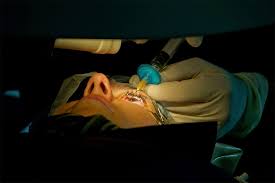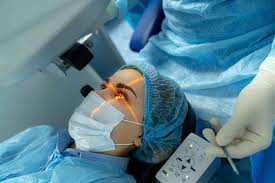

If an earthquake strikes during LASIK, the laser halts, your surgeon protects your eye first, and the surgery is resumed or safely rescheduled once it is safe.
Why this is less scary than it sounds: the laser steps run for only about 13-30 seconds per eye, the femtosecond laser halts automatically if suction is lost, and an earthquake mid-LASIK is so rare that no one publishes a count. The part most people miss: the bigger risk can come after surgery, when a falling object, not the tremor itself, is what threatens your flap.
Key Takeaways
- The laser has built-in stops. If suction on the eye is lost, the system halts; during laser reshaping, an eye tracker follows the eye.
- What happens next depends on the stage. Some steps can be restarted, others are abandoned and rescheduled.
- After LASIK, protect your head and eyes during shaking. Documented flap displacements follow direct contact, not vibration.
- The exposed window is short. Laser steps run roughly 13-30 seconds per eye, and femtosecond suction loss, from any cause, is 0.06-0.8%.
- Be wary of “earthquake-proof” claims. Ask your clinic for specifics instead.
What Happens at Each Stage of LASIK If the Ground Shakes?
Here is what the safeguards do at each stage; exact behaviour depends on your clinic’s lasers.
| Stage | Laser runs for | What shaking could do | What happens next |
|---|---|---|---|
| Before the laser starts | Not yet running | Nothing has been cut yet | ✅ The team waits or reschedules |
| Flap creation (laser holds the eye by suction) | About 8-10 seconds | Could break suction | ⚠️ The system halts; EyeWiki says an early loss may be re-treated, but a mid-cut loss is generally aborted |
| Reshaping with the excimer laser | About 5-20 seconds | Could move the eye | ⚠️ An eye tracker follows the eye; one clinic says the laser pauses until the eye is back in position |
| Flap repositioned, shield on | Finished | Treatment is complete | ✅ The team checks the flap and protects the eye |
Sources: FDA labelling (VisuMax); EyeWiki; Alcon; We Fix Eyes (NZ); Specialty Vision.
FDA labelling for the VisuMax says that if suction is lost completely, the console detects the pressure drop and automatically halts the procedure. Alcon lists a 1,050 Hz eye tracker on its WaveLight EX500. Add up the laser steps and the exposed window is only about 13-30 seconds per eye, on one New Zealand clinic’s timings. That clinic says suction loss does not cause loss of vision. For the full sequence, see what happens in laser eye surgery and how long LASIK takes per eye.
How Often Is LASIK Interrupted, and What Comes Next?
An earthquake would be an unusual cause, but an interrupted procedure is a planned-for event. A review reports femtosecond suction loss in 0.06-0.8% of procedures; a study of 3,009 eyes found eight breaks (about 0.27%), with no postoperative complications or re-treatment.
| Your situation | What it means | What to do |
|---|---|---|
| Stopped before the flap is cut | ✅ Nothing has been cut yet | Rebook once the team confirms it is safe |
| Suction lost early in the flap cut | ⚠️ The surgeon may attempt immediate re-treatment at the same or a deeper plane | Follow your surgeon’s call and expect an extra check |
| Suction lost mid-cut | ⚠️ Generally stopped and rescheduled after several months, or converted to surface ablation | Keep every follow-up; compare surface ablation and LASIK |
Sources: EyeWiki; Touch Ophthalmology; Healio.
Does the Type of Surgery Matter in an Earthquake?
| Procedure | Suction used? | If shaking interrupts |
|---|---|---|
| LASIK | Yes, for the femtosecond flap step | See the table above |
| SMILE / SMILE Pro | Yes, during the laser step | In one early series (166 eyes), 9 lost suction: 7 were re-docked and finished, 1 was converted to femto-LASIK, 1 was stopped and had LASEK 3 months later |
| Surface ablation (PRK) | No flap is created | EyeWiki says trauma after surgery carries less risk with PRK than LASIK because there is no flap |
Sources: We Fix Eyes (NZ); ASCRS; EyeWiki.
Each option has its own recovery and limits; compare them in PRK vs LASIK vs SMILE vs SMILE Pro.
Has It Ever Happened? A Real Case From Japan
No LASIK-specific data exist that we could find, but one surgeon has described an earthquake during eye surgery. On 11 March 2011, the Fukushima earthquake struck during a cataract operation, and the eye “just disappeared from view” in the microscope. He covered it with his hand, kept the doors open and continued. It took 17 minutes instead of 8, and all four patients that afternoon stayed calm and had good next-day checks.
It was cataract surgery, not LASIK, and a laser case may well be paused instead. The lesson is the order of priorities: protect the eye first, then decide. Nervous? Read whether you are asleep during LASIK; being awake lets you follow instructions.
Delhi NCR and Earthquakes: Should You Worry?
Delhi sits in Seismic Zone IV, the second highest in India. Two recent tremors show the range.
| Detail | 17 Feb 2025 | 21 Mar 2023 |
|---|---|---|
| Time | 5:36 am | 10:17 pm |
| Magnitude | 4.0 | 6.6 |
| Depth | 5 km | 156 km |
| Epicentre | Jheel Park, near Dhaula Kuan | Afghanistan, 133 km SSE of Fayzabad |
| Reported damage | None immediately | None immediately |
Sources: Tribune India; Deccan Herald.
The 2023 shaking was reported as relatively prolonged because of the quake’s depth, so a distant large quake can last longer in Delhi than a small local one. Smaller local quakes have come every two to three years, including a 3.3 in 2015. Zone IV is not a reason to avoid LASIK, but it is a reason to ask the questions below. Planning ahead? Read what to expect at a LASIK consultation in Delhi.
What If It Happens After LASIK?
Flap displacement is rare: a large series found 0.012% over 12 months. The flap never fully heals, so a direct knock can reopen it even years later. Case reports describe contact with a baby’s finger, a map edge and a fall. See other LASIK flap complications too.
In an earthquake, the realistic danger is falling objects and glass. India’s NDMA advises dropping, taking cover under sturdy furniture and holding on; if none is available, cover your face and head with your arms. Stay away from glass and windows, and do not run to another spot, because most injuries happen when people move. When you leave, watch for anything that could fall during aftershocks.
| What happened | What it means | What to do |
|---|---|---|
| Shaking, but nothing touched your eye | ✅ Documented flap problems follow direct contact | Keep to your post-LASIK precautions |
| Shaking at night, shield on | ✅ Staying put is safer than walking on a floor that may have broken glass | Hold on and protect your head with a pillow |
| Dust or grit in your eye | ⚠️ Rubbing could irritate the surface or disturb the flap | Don’t rub; blink and rinse with clean water, and read what to do if dust gets in your eyes |
| Something brushed or struck your eye | ⚠️ The flap could be affected | Don’t rub; call your clinic the same day. Read what happens if you poke your eye |
| Sudden blur, pain or a foreign-body feeling after a knock | ❌ Possible flap dislocation | Seek an urgent eye check |
Sources: EyeWiki; Ophthalmology Times; Dove Medical Press; NDMA; CDC; Prevent Blindness.
Your Post-LASIK Earthquake Kit
Quakes can leave dust, broken glass and no power. Keep this near your bed.
| Item | Why it helps |
|---|---|
| Spare glasses | Prevent Blindness advises an extra pair; see what to do with old glasses after LASIK |
| Your prescribed eye drops and prescriptions | Eye medication belongs in an emergency kit |
| Sterile saline | For rinsing; ask your clinic if saline is fine after LASIK |
| Sleep shield | Most patients wear one at night for at least the first week; see LASIK recovery goggles |
Sources: Prevent Blindness; Specialty Vision.
Your Part on the Day
| Your situation | What it means | What to do |
|---|---|---|
| You are anxious about tremors beforehand | ✅ A mild sedative can be available | Tell your team; read why you stay awake during LASIK |
| You feel shaking mid-procedure | ⚠️ The laser stops itself if suction is lost or the eye moves; the surgeon can also stop it | Stay as still as you can and follow instructions |
| You want to brace or squeeze | ⚠️ Squeezing the eyelids raises the risk of suction loss | Keep your eyelids relaxed |
Sources: We Fix Eyes (NZ); Caster Eye Center.
Questions to Ask Your Clinic
“Earthquake-proof centre” claims are hard to check. Specific answers are not.
| Ask | Why it matters |
|---|---|
| Are the lasers on backup power (UPS)? | Quakes often cut electricity; one NZ clinic runs both lasers on UPS |
| What happens if suction is lost mid-procedure? | The answer shows how the team handles interruptions |
| What is your emergency-stop plan? | A written protocol is better than reassurance |
Source: We Fix Eyes (NZ).
Our guides to the LASIK complication rate and tests done before LASIK help you prepare, as does our dos and don’ts before laser eye surgery.
Bottom Line
An earthquake during LASIK is extremely rare, and the laser’s safeguards exist for interruptions. Your team would protect your eye first, then resume or reschedule. After surgery, protect your head and eyes during shaking and call your clinic if anything touches your eye. For the weeks ahead, read what to expect after LASIK. Book a consultation at Visual Aids Centre and ask how our team handles emergencies.
FAQs
What happens if an earthquake hits during LASIK?
The team stops the laser and protects your eye. Depending on the stage, surgery is resumed or rescheduled.
Will the laser keep firing if the ground shakes?
It should not. If suction is lost, the VisuMax halts, and excimer lasers use eye tracking.
Can an earthquake damage my LASIK flap?
Documented displacements follow direct contact with the eye, not vibration. Protect your eyes from falling objects.
What should I do during an earthquake after LASIK?
Follow NDMA advice: drop, cover and hold on, covering your head and face, away from glass.
Is LASIK unsafe in Delhi because of earthquakes?
No evidence says so. Delhi is in Zone IV, so ask your clinic about its emergency plan.
How long is the laser actually on?
One NZ clinic times flap creation at 8-10 seconds and reshaping at 5-20 seconds per eye.
How often is LASIK interrupted?
Reviews put femtosecond suction loss, from any cause, at 0.06-0.8% of procedures. Surgeons have set steps for it.
What if an earthquake hits the night after LASIK?
The CDC says to stay in bed, hold on and protect your head with a pillow, because broken glass on the floor can injure you.
Is PRK safer than LASIK in an earthquake?
PRK creates no flap, so there is no flap to dislodge afterwards. It has its own trade-offs, so discuss it with your surgeon.
👁️ MEDICALLY REVIEWED BY
Padmashree Dr. Vipin Buckshey
Optometrist & Laser Vision Correction Specialist | AIIMS Graduate, 1977 | Padma Shri Honouree | Official Optometrist to the President of India | Former President, Indian Optometric Association | Founder, Visual Aids Centre
Patients in Delhi and the NCR sometimes ask what would happen if an earthquake interrupted their surgery, and a calm, honest answer matters as much as the technology. Dr. Vipin Buckshey founded Visual Aids Centre in 1980, and in 1999 it became the first eye centre in Delhi to introduce LASIK. The centre reports over 250,000 Laser Vision Correction procedures to date. This article is general information rather than medical advice, and your own surgeon’s guidance always takes priority. Read more at our story.