
“Bed rest” isn’t quite the right phrase for SMILE Pro recovery — and that mismatch causes more patient confusion than almost any other post-op question. You don’t spend a day or two lying flat in bed. What you actually need is a few hours of eyes-closed rest on surgery day, a screen-free 24 hours, and a gradual return to normal activity over the following week. Most patients are back at a desk job within 24–48 hours — which is the opposite of what “bed rest” implies. This guide breaks down exactly what rest looks like at each stage, with an activity-by-activity timeline so you know precisely when you can shower, exercise, use your phone, and go back to work.
Key Takeaways
- “Bed rest” is a misleading term for SMILE Pro recovery — you rest with eyes closed for several hours on surgery day, not lying down for 24–48 hours straight.
- Most patients return to desk work within 24–48 hours — consistent across ZEISS’s own recovery guidance and independent clinical sources.
- Screens, reading, and strenuous activity should be avoided for the first 24 hours — this is the actual restriction, not immobility.
- Water and dust exposure need care for about a week — showering is fine after the first day, but keep water out of your eyes.
- Contact sports and strenuous exercise need roughly 3 weeks before resuming.
- Full visual stability takes 1–3 weeks, even though functional vision returns much sooner.
“Bed Rest” — What It Actually Means
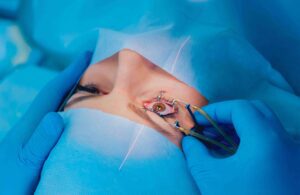
Patients searching this question are usually picturing something like post-surgical bed rest after a major operation — lying flat for a day or two, unable to function. That’s not what happens after SMILE Pro. The procedure removes a small lens-shaped piece of corneal tissue through a 2–4mm incision, with no stitches and no corneal flap, which is exactly why the recovery is so much lighter than the phrase “bed rest” suggests.
What surgeons actually mean is closer to “protect your eyes and don’t strain them” than “stay horizontal.” On surgery day, you’ll be encouraged to go home and nap with your eyes closed for several hours — not because your body needs to lie still, but because closed eyelids and sleep give the corneal surface a stable, undisturbed environment to begin healing. After that initial rest window, most patients are up, moving around the house, and functioning normally well before the 24-hour mark.
It’s easy to see where the confusion comes from. SMILE Pro is genuinely a surgical procedure, and the instinct after any surgery is to assume a longer, more restrictive recovery than what’s actually needed. But because SMILE Pro removes tissue through a tiny 2–4mm incision rather than creating a full corneal flap, the eye’s surface stays largely intact — which is exactly why the healing process doesn’t require the kind of prolonged immobility associated with more invasive procedures.
Why the “Bed Rest” Myth Persists
Part of the confusion traces back to older refractive procedures and general surgical aftercare content circulating online, where multi-day, low-activity recovery genuinely is standard advice. Patients researching eye surgery recovery often land on generic post-surgical care guides written for entirely different procedures — anything from orthopaedic surgery to general anaesthesia recovery — and apply that timeline to SMILE Pro by default.
The other source of confusion is LASIK’s own reputation. Older LASIK protocols, and some flap-based procedures still performed today, do call for a more cautious first 24–48 hours specifically because of flap-related trauma risk. SMILE Pro’s flapless design is precisely what removes that particular restriction, which is part of why its recovery expectations look different from what many patients assume going in.
Verified Recovery Data
Here’s what’s actually documented about SMILE Pro recovery timelines, rather than a single clinic’s opinion.
| Milestone | Figure | Source |
|---|---|---|
| Global SMILE procedures performed | 6 million+ since 2011 | Peer-reviewed ophthalmology study (PMC) |
| Eyes achieving 20/20 uncorrected vision or better | 97% at 1 year | Comparative clinical study, SMILE vs LASIK vs T-ICL (PMC) |
| Functional vision improvement | Within hours of surgery | ZEISS official SMILE Pro recovery guidance |
| Return to desk-based work | 24–48 hours | Consistent across multiple published clinical recovery guides |
| Full visual stability | 1–3 weeks | Consistent across ZEISS and independent clinical sources |
Notice what’s absent from this table: any documented requirement for continuous bed rest. The “24–48 hours” figure that does appear consistently refers to when patients typically resume desk work — which only makes sense if they were mobile and functioning well before that point, not confined to bed. If anything, the consistent theme across independent sources is how quickly SMILE Pro patients return to normal life compared to older laser vision correction techniques, not how long they need to stay down.
Your First Week at a Glance
Beyond the activity-by-activity list, here’s the shape of a typical week — useful if you’re planning time off work or family logistics around your surgery date.
| Day | What’s Typical |
|---|---|
| Day 0 (surgery day) | Nap with eyes closed for several hours; no screens for the rest of the day |
| Day 1 | Noticeable clarity improvement; most return to desk work |
| Days 2–3 | Showering and light routine tasks resume with water precautions |
| Days 4–7 | Light exercise typically cleared; screen tolerance improves |
| Weeks 2–4 | Swimming and full contact-sport clearance, pending surgeon check |
Activity-by-Activity Recovery Timeline
This is the table most patients actually want — when each specific activity is realistically back on the table.
| Activity | When It’s Typically Safe | Notes |
|---|---|---|
| Screens, reading, driving | Avoid for first 24 hours | See phone and screen use guidance |
| Desk-based work | 24–48 hours | Take frequent screen breaks initially |
| Showering (careful, no direct water on eyes) | After the first 24 hours | See shower timing guidance |
| Washing hair | Few days, with care | See hair-washing precautions |
| Light exercise / running | About 1 week | See running after SMILE Pro |
| Swimming | About 2–4 weeks | See swimming timeline guidance |
| Contact sports / strenuous exercise | About 3 weeks | See exercise return timeline |
For a fuller day-by-day breakdown beyond just this checklist, our guide on what to expect during SMILE Pro recovery walks through the entire healing process stage by stage.
What to Actually Do on Surgery Day
If “lie in bed for two days” isn’t accurate, here’s what surgery day actually looks like in practice.
- Arrange a ride home — you won’t be able to drive yourself immediately after the procedure.
- Nap for several hours with your eyes closed once you’re home — this is the closest thing to “bed rest” that’s actually recommended.
- Use prescribed eye drops on schedule from the moment you’re given them.
- Skip screens, fine print, and bright environments for the rest of the day.
- Wear any protective eye shield provided, especially overnight, to prevent accidental rubbing while asleep — a common concern covered in our guide on sleeping safely after SMILE Pro.
By the following morning, most patients notice a genuine, often surprising improvement in clarity compared to the evening before — which is a big part of why “bed rest” undersells how quickly this recovery actually moves. For a sense of what a typical day looks like once you’re a little further along, see a day in the life after SMILE Pro and what one week post-surgery typically looks like.
It’s worth planning your surgery date with this realistic timeline in mind rather than the exaggerated one. If you’re expecting to disappear from work or family responsibilities for two full days, you may end up over-preparing for a recovery that’s considerably gentler than that — while under-preparing for the parts that genuinely do take longer, like full contact-sport clearance or getting back in the pool.
When Rest Isn’t Enough — Signs to Call Your Surgeon
Most SMILE Pro recovery is uneventful, but a small number of symptoms shouldn’t just be rested through.
| Symptom | Normal Recovery | Call Your Surgeon |
|---|---|---|
| Mild grittiness or light sensitivity, day 1 | ✅ Expected | |
| Foggy vision that clears within hours | ✅ Expected | |
| Sharp or worsening pain | ⚠️ Needs evaluation | |
| Vision that worsens instead of improving after day 1 | ⚠️ Needs evaluation |
The full precaution list — makeup, follow-up scheduling, and more — is covered in our complete do’s and don’ts guide for SMILE Pro recovery.
Bottom Line
How long is bed rest after SMILE Pro? In the literal sense you’re probably picturing, it isn’t — you rest with your eyes closed for a few hours on surgery day, avoid screens for 24 hours, and you’re typically back at a desk within 24–48 hours. What actually takes longer is the careful reintroduction of exercise, swimming, and contact sports over the following weeks while your cornea fully stabilises.
Have a specific activity or timeline question about your own recovery? Book a consultation at Visual Aids Centre — every recovery plan is set against your own healing pace, not a generic calendar.
Frequently Asked Questions
How long is bed rest after SMILE Pro?
There isn’t literal bed rest required. You rest with your eyes closed for several hours on surgery day, avoid screens for 24 hours, and most patients are back to desk work within 24–48 hours.
Do I need to stay lying down for 24–48 hours after SMILE Pro?
No. That’s a common misconception. You can move around normally at home after your initial rest period on surgery day — the restriction is on screens and strain, not mobility.
When can I go back to work after SMILE Pro?
Most patients with desk jobs return within 24–48 hours. Jobs involving heavy screen use, dust, or physical activity may need a longer, surgeon-guided timeline.
When can I shower after SMILE Pro?
Typically after the first 24 hours, with care taken to keep water out of your eyes directly.
When can I exercise or swim after SMILE Pro?
Light exercise is generally fine around one week. Swimming needs about 2–4 weeks, and contact sports or strenuous exercise around 3 weeks, depending on your surgeon’s assessment.
Is blurry vision on day one normal after SMILE Pro?
Yes. Mild blurriness, grittiness, or light sensitivity in the first 24–48 hours is expected and typically improves quickly. Worsening vision or sharp pain is not normal and should be reported to your surgeon.
👁️ MEDICALLY REVIEWED BY
Padmashree Vipin Buckshey
BS Optometry | AIIMS Graduate, 1977 | Padma Shri Honouree | Official Optometrist to the President of India | Laser Vision Correction Specialist & Founder, Visual Aids Centre
“Bed rest” is one of the most consistently misunderstood terms Vipin Buckshey hears from SMILE Pro patients pre-surgery — most arrive expecting a multi-day recovery far longer than what the procedure actually requires. He founded Visual Aids Centre in 1980 — the first eye centre in Delhi to introduce LASIK surgery in 1999 — and has overseen 250,000+ Laser Vision Correction procedures across a 45-year career, including a high volume of SMILE Pro cases since its introduction. The recovery timelines in this article reflect standard SMILE Pro post-operative protocol, consistent with guidance published by ZEISS, the manufacturer of the SMILE Pro platform. Read more at our story.