
You had SMILE surgery expecting crisp, glasses-free vision—and during the day, things look great. But when the sun goes down, you notice halos around streetlights, a bit of glare from oncoming headlights, or a general “softness” to your vision that wasn’t there before. Before you panic, know this: temporary changes in night vision after SMILE surgery are common and well-documented, and for the vast majority of patients, they resolve within weeks to a few months.
This guide from Visual Aids Centre explains exactly why night vision is affected after SMILE (Small Incision Lenticule Extraction), what symptoms are normal, how they differ from long-term complications, and what you can do to support faster recovery. Whether you had standard SMILE or the newer SMILE Pro procedure, the principles below apply to your healing timeline.
Key Takeaways
- Temporary night vision disturbances—halos, glare, and starburst patterns—are normal in the first 1–3 months after SMILE surgery.
- These symptoms occur because the cornea is still healing and the optical interface hasn’t fully stabilised.
- Patients with larger pupils or higher prescriptions may experience more noticeable effects initially.
- Most patients report that night vision returns to normal or near-normal within 3–6 months post-surgery.
Why Night Vision Changes After SMILE Surgery
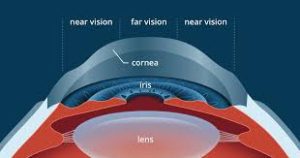
During SMILE, a femtosecond laser creates a thin disc of tissue (called a lenticule) inside the cornea, which is then removed through a small 2–4 mm incision. This reshapes the cornea to correct your refractive error. Unlike LASIK, there’s no large flap—but the cornea still undergoes significant structural change that takes time to stabilise.
In the early healing period, the corneal interface where the lenticule was extracted can scatter light slightly. When your pupil dilates in low-light conditions—as it naturally does at night—more of the corneal surface is exposed, including areas at the edge of the treatment zone. This mismatch between pupil diameter and optical zone creates the halos, glare, and starburst patterns that many patients notice in the first weeks. Additionally, mild corneal oedema (swelling) in the healing interface can temporarily alter how light refracts through the eye.
The good news is that these optical irregularities are part of normal healing. As the corneal tissue remodels and the interface smooths out, light scattering decreases and night vision quality improves steadily.
Common Night Vision Symptoms After SMILE
Halos
Bright, ring-like circles around light sources—especially headlights, streetlamps, and traffic signals. Halos are the most frequently reported night vision symptom and are usually most pronounced in the first 2–4 weeks. For a deeper look at how long this lasts across refractive procedures, see our article on how long halos last after laser eye surgery.
Glare
A washed-out or dazzling sensation when looking at bright lights, making it harder to see objects around the light source. Glare tends to be more bothersome during night driving. If this persists beyond the expected recovery window, our guide on reducing glare after refractive surgery covers both short-term coping strategies and long-term solutions.
Starbursts
Rays or spikes extending outward from point light sources—like a star effect around each light. Starbursts often accompany halos and share the same cause: light scattering at the healing interface or the edge of the treatment zone.
Reduced Contrast Sensitivity
Even without obvious halos or glare, some patients feel that their vision in dim environments isn’t as “sharp” as expected. Colours may appear slightly muted, and distinguishing objects in low contrast (grey-on-grey) can be harder. This is related to higher-order aberrations that are temporarily elevated during corneal healing.
When Does Night Vision Improve? The Recovery Timeline
Week 1–2: Most Noticeable
Night vision symptoms peak in the first two weeks. The corneal interface is freshly created, mild oedema is present, and the tear film is still stabilising. Most surgeons advise against night driving during this window—not because the symptoms are dangerous, but because they can be distracting.
Week 3–6: Gradual Improvement
Halos and glare begin to diminish noticeably as the corneal interface heals and higher-order aberrations decrease. Many patients feel comfortable driving at night by the end of the first month, though some residual effects may linger.
Month 2–6: Near-Complete Resolution
By three to six months, the vast majority of patients report that night vision has returned to normal or is better than it was with glasses. Residual dryness—which contributes to light scatter—also continues improving during this period.
Pupil Size and Its Role in Night Vision Quality
Your natural pupil size in darkness is one of the strongest predictors of how much night vision disturbance you’ll experience after SMILE. When the pupil dilates beyond the diameter of the optical treatment zone, light passes through untreated cornea at the periphery—creating halos and glare.
Modern SMILE platforms (including the Zeiss VisuMax used for SMILE Pro) create optical zones of 6.0–6.5 mm, which accommodates most patients well. However, individuals with naturally large pupils (above 7 mm in scotopic conditions) may experience more pronounced symptoms initially. Your surgeon measures pupil size during the pre-operative evaluation precisely for this reason—it’s factored into whether SMILE is the right procedure and how the treatment zone is planned.
Night Vision After SMILE vs LASIK: Is There a Difference?
One of the reasons patients choose SMILE over LASIK is the expectation of fewer night vision issues—and the clinical data supports this to a degree. Because SMILE doesn’t create a large corneal flap, there’s less disruption to corneal nerves and biomechanics, which can translate to slightly fewer higher-order aberrations in some patients.
That said, both procedures can produce temporary halos and glare during the healing period. The key differences are subtle: SMILE tends to preserve more corneal structural integrity (relevant for reducing dry eye risks and maintaining corneal stability), while LASIK’s larger treatment interface can sometimes produce a smoother optical surface sooner. In practice, most patients reach similar night vision quality by the three-to-six-month mark regardless of which procedure they had.
For patients specifically worried about night-time visual quality, SMILE Pro’s faster laser speed and refined interface may offer a marginal advantage due to smoother lenticule edges. However, the difference is clinically modest—both SMILE and SMILE Pro deliver excellent long-term night vision outcomes.
Tips to Improve Night Vision During Recovery
Use your prescribed lubricating eye drops consistently. A healthy tear film reduces light scatter significantly—many patients find that a drop of preservative-free artificial tears right before night driving makes an immediate difference. Dry corneal surface is one of the simplest causes of glare, and one of the easiest to fix.
Consider wearing anti-glare or night driving glasses with a light amber or yellow tint during the early recovery weeks. These won’t correct halos entirely, but they cut glare from oncoming headlights and improve contrast in low-light environments. Avoid wearing sunglasses at night, as darkening already limited light worsens the problem.
Keep your windshield clean—inside and out. A dirty windshield amplifies glare dramatically, and patients recovering from SMILE are more sensitive to scattered light than they realise. Similarly, ensure your vehicle’s headlight lenses aren’t hazy, as this affects the quality of your forward illumination and increases reflected glare.
Give your eyes time to adapt before driving. Stepping from a brightly lit environment directly into darkness makes halos more pronounced. Allow a few minutes in dim lighting to let your pupils adjust naturally. And if night vision symptoms feel too distracting for safe driving in the first couple of weeks, simply avoid it—this is the most sensible advice your surgeon will give you.
When to Contact Your Surgeon
While temporary night vision symptoms are normal, certain signs warrant a prompt call to your eye care provider. Contact your surgeon if halos or glare are getting worse rather than better after the first month, if you notice a significant drop in overall vision clarity (day or night) that doesn’t improve with lubricating drops, if you see new floaters, flashes of light, or a shadow in your peripheral vision (which could indicate a retinal issue unrelated to the SMILE procedure), or if one eye is dramatically worse than the other in low-light conditions.
Persistent night vision issues beyond six months are uncommon but can occur. In these cases, your surgeon may assess for residual refractive error, irregular astigmatism, or corneal surface irregularities. Treatments such as targeted approaches to improve night vision, including wavefront-guided enhancement or specialised contact lenses, can address persistent symptoms effectively.
Conclusion
Night vision changes after SMILE surgery—halos, glare, starbursts, and reduced contrast—are a normal part of the healing process that resolves for most patients within three to six months. The symptoms are driven by corneal interface healing, temporary higher-order aberrations, and tear film instability, all of which improve steadily as your eyes recover. Patients with larger pupils or higher prescriptions may notice more pronounced effects initially, but the long-term outcomes are excellent. If you’re considering SMILE or SMILE Pro and want to understand how your specific eye characteristics affect night vision prognosis, book a consultation at Visual Aids Centre—our pre-operative evaluation covers every factor that influences your post-surgical night vision quality.
Frequently Asked Questions (FAQs)
Is it normal to see halos at night after SMILE surgery?
Yes. Halos around lights are one of the most common temporary symptoms after SMILE. They typically peak in the first two weeks and fade significantly by one to three months as the cornea heals.
How long does night vision take to recover after SMILE?
Most patients notice substantial improvement within four to six weeks. Full stabilisation of night vision usually occurs by three to six months post-surgery.
Can I drive at night after SMILE surgery?
Most surgeons advise avoiding night driving for the first one to two weeks. After that, you can resume if you feel comfortable, though some glare sensitivity may persist for a few more weeks.
Does SMILE cause permanent night vision problems?
Permanent night vision problems after SMILE are rare. Studies show that long-term, most patients achieve the same or better night vision quality compared to pre-surgery vision with glasses or contacts.
Is night vision better after SMILE or LASIK?
Both procedures produce excellent long-term night vision. SMILE may have a slight edge in corneal stability and dry eye reduction, but the night vision outcomes are comparable by the three-to-six-month mark.
👁️ MEDICALLY REVIEWED BY
Padmashree Dr. Vipin Buckshey
Optometrist & Post-Operative Care Specialist | AIIMS Graduate, 1977 | Padma Shri Honouree
The night vision recovery guidance in this article reflects post-operative outcomes tracked across thousands of SMILE and SMILE Pro procedures supervised by Dr. Vipin Buckshey at Visual Aids Centre. With more than four decades of clinical experience and over 250,000 laser vision correction procedures performed, Dr. Buckshey—an AIIMS alumnus, former President of the Indian Optometric Association, and official optometrist to the President of India—personally evaluates night vision concerns during follow-up care to ensure every patient’s recovery stays on track.