
You have just had SMILE Pro surgery and, as life tends to do, it refuses to pause for your recovery. A difficult phone call, a moving film, an onion that needed chopping — and suddenly you are wondering whether crying will undo everything your surgeon carefully did. It is one of the most common questions patients ask in that first week, and the honest answer is far more reassuring than you might expect.
The short version: crying after SMILE Pro surgery is safe. Natural tears are not the enemy. What you need to avoid — with real discipline — is rubbing your eyes while those tears fall or immediately after. This guide from Visual Aids Centre explains exactly why, how long that caution needs to last, and what to do if emotion genuinely gets the better of you in those first critical weeks.
Key Takeaways
- Shedding tears after SMILE Pro is harmless — natural tears are lubricating and gentle on healing corneal tissue.
- Rubbing your eyes while crying is the real risk; it can stress the small corneal incision before it has fully sealed.
- Unlike LASIK, SMILE Pro creates no corneal flap, giving your eye greater structural stability — but the 2–3 mm incision still needs four weeks to heal fully.
- If you cry, let tears fall freely or dab gently at the outer corner with a clean tissue. Never press, wipe firmly, or touch the eye itself.
- Persistent blurring or pain after any rubbing episode warrants an immediate call to your surgeon.
What Makes SMILE Pro Different — and Why It Matters Here
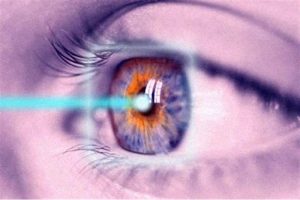
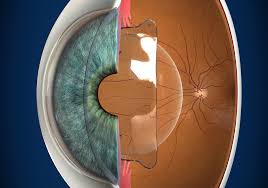
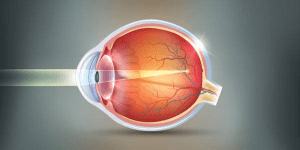
To understand why crying is far less worrying after SMILE Pro than patients fear, it helps to know what the procedure actually does to your cornea. SMILE Pro uses a femtosecond laser to create a tiny lens-shaped disc of tissue — called a lenticule — inside the cornea. That disc is then removed through a keyhole incision just 2–3 millimetres wide. No flap is cut. No large surface is left open to the environment.
This is the fundamental structural advantage over LASIK. With LASIK, a hinged flap is lifted and repositioned, and that flap can be displaced by physical pressure in the first weeks. SMILE Pro’s architecture is far more closed — but “more closed” is not the same as “completely healed.” That small incision is a real wound, and it is sensitive to mechanical stress — the kind that comes specifically from pressing, rubbing, or wiping the eye with force.
One meaningful benefit of this flapless design is a lower rate of post-operative dry eye. Because fewer corneal nerves are disrupted compared to LASIK, tear film production recovers more quickly. You can read more about this in our overview of how SMILE Pro reduces dry eye risks for patients who have already struggled with dry eyes before surgery.
Is Crying Safe After SMILE Pro Surgery?
Tears Themselves Are Not the Problem
Natural tears are a saline solution your body produces continuously. They are not caustic, they do not interfere with corneal healing, and they do not enter the keyhole incision. In fact, a healthy tear film is something your care team actively encourages post-surgery — it keeps the ocular surface moist and supports the healing epithelium. Crying produces more tears than usual, but the tears themselves are simply doing what they always do.
Many patients also experience emotional sensitivity in the days following surgery purely because the recovery is intense — the drops schedule, the light sensitivity, the disrupted sleep routine. If you find yourself tearful in the first week, that is completely understandable. Emotional crying alone is not a clinical concern. What comes next — what you do with those tears — is where the caution lives.
Rubbing Is the Real Risk
The reflex to wipe or rub your eyes when you cry is nearly universal, and it is precisely this behaviour that can cause harm in the first four weeks after SMILE Pro. Even gentle pressure applied to the eye — wiping tears away with a knuckle, pressing a tissue firmly against the lids, or rubbing because the eyes itch — creates mechanical stress on tissue that is still actively healing.
Post-operative dry eye is common in the first few weeks and can intensify the urge to rub. If your eyes feel gritty or irritated after crying, that is the moment to reach for your prescribed lubricating drops rather than your fingers. Our guide on managing dry eyes after SMILE Pro surgery covers the drops schedule and which symptoms to watch for as your tear film stabilises.
What Happens If You Rub Your Eyes While Crying?
Because SMILE Pro does not create a flap, the risk of flap displacement — a well-known concern after LASIK — does not apply here. That said, rubbing can still disrupt the small keyhole incision before it has bonded fully, potentially causing micro-trauma to the healing corneal stroma and temporarily affecting visual clarity. In more significant cases, pressure at the incision site can cause the edges to separate slightly, which may require a clinical review to rule out complications.
For most patients who rub mildly and only once, the result is transient blurring or mild irritation that settles within a few hours. But because you cannot know in the moment whether your rubbing was gentle enough, the rule is simple: treat every eye-touching episode in the first four weeks as something worth monitoring and reporting to your surgeon if any symptoms follow.
How Long Should You Avoid Rubbing?
Most surgeons advise patients to avoid rubbing their eyes for a minimum of four weeks after SMILE Pro. This is the window during which the 2–3 mm incision is actively healing and the surrounding corneal tissue is remodelling. By the end of week four, the incision is typically well-sealed and structurally sound enough that ordinary eye contact no longer poses a meaningful risk.
That said, developing gentle eye hygiene habits permanently — dabbing rather than wiping, blotting rather than pressing — is worth keeping long after the four-week mark. They protect the long-term health of your corneal surface and are simply good practice for anyone, surgery or not.
Many patients wonder what else falls under the “be careful” category during this healing window. Physical activity — particularly anything that involves impact, sweat dripping into the eyes, or the risk of a blow to the face — carries its own indirect rubbing risk. We have a dedicated resource on returning to running after SMILE Pro surgery if physical activity timelines are a concern for you.
Practical Tips to Protect Your Eyes During Emotional Moments
Knowing that crying is fine but rubbing is not is straightforward in theory. Managing an actual emotional moment with discipline is another matter entirely. These habits make it considerably easier in practice.
Keep soft tissues within reach at all times during the first two weeks. The moment you feel tears forming, have one ready so you dab lightly at the outer corner of the eye — never the centre — without pressing against the lid. Apply your prescribed preservative-free lubricating drops immediately after any crying episode; this soothes the ocular surface and reduces the subsequent urge to rub. Wear your protective goggles while sleeping, particularly in the first two weeks — they also prevent unconscious nighttime eye-touching during periods of emotional stress.
Limiting screen time during emotionally loaded periods is also worth considering. Screens reduce your blink rate, which worsens tear film instability and compounds discomfort when your eyes are already irritated from crying. Our guide on screen use after SMILE Pro surgery covers safe daily screen timelines in detail.
Broader hygiene boundaries apply across the same recovery window. Showering, for instance, requires its own caution around water pressure and soap near the eye. If you are uncertain about everyday routines beyond crying, our overview of showering safely after SMILE Pro surgery answers the most common daily-life questions.
When to Call Your Surgeon
Crying is not a reportable event, and you do not need to notify your clinic every time you shed tears. But a few specific scenarios that follow a crying episode — especially one involving any eye contact — are worth flagging to your care team without delay.
Call your surgeon if your vision becomes suddenly blurrier than it was before the episode and does not recover within a few hours. If you notice increased redness that goes beyond normal post-operative pinkness, or a feeling that something has physically shifted inside the eye, seek assessment the same day. Pain that exceeds normal post-operative sensitivity — a sharp, persistent ache rather than mild grittiness — is also a clear signal to call rather than wait for your next scheduled appointment.
Our resource on eye pain after SMILE Pro surgery describes in practical terms what falls within the expected range of normal discomfort versus what needs direct clinical attention. If you are ever uncertain, your surgeon would always rather reassure you than have a complication go unreported.
Conclusion
Crying after SMILE Pro surgery is not something you need to suppress or fear. Natural tears are harmless, and the procedure’s flapless design means your eye has greater structural resilience than after traditional LASIK. The one firm rule is keeping hands and tissues away from the eye itself — dab gently at the outer corners, reach for lubricating drops, and let the healing proceed undisturbed. Follow that principle for four weeks and you will not have a problem.
If you are still in the planning stage and want to know everything to expect from SMILE Pro recovery — including what to avoid in the weeks leading up to the procedure — our guide on what not to do before SMILE Pro surgery is a thorough starting point. And if you would like personalised guidance from a specialist, Visual Aids Centre’s team is available for a one-to-one consultation at any stage of your journey.
Frequently Asked Questions (FAQs)
Can I cry on the day of SMILE Pro surgery?
It is best to avoid crying on the day of surgery and in the 24 hours immediately after. The incision is at its most vulnerable in this early window. If you feel emotional, that is entirely understandable — but try to resist the reflex to touch or rub your eyes at all costs.
Will crying cause an infection after SMILE Pro?
No. Natural tears do not introduce infection risk. Infections arise from contaminated contact — touching the eye with unwashed hands or exposing it to dirty water. Tears themselves carry no contamination concern.
What if I accidentally rub my eye while crying?
Do not panic. Check whether your vision feels the same as before the episode, apply lubricating drops, and monitor your comfort over the next few hours. If anything feels different or vision changes, call your surgeon the same day.
Is SMILE Pro safer than LASIK when it comes to crying?
In a practical sense, yes. Because there is no corneal flap to displace, SMILE Pro carries less risk from pressure or rubbing compared to LASIK. The keyhole incision still heals over four weeks, so the no-rubbing rule still applies — it is simply a narrower risk window than with LASIK.
Can I use artificial tears to soothe my eyes after crying?
Yes — and your care team will already have you on a preservative-free lubricating drop schedule. Applying drops after a crying episode is exactly the right response; it eases irritation and stabilises the tear film without any contact or pressure on the eye.
How long after SMILE Pro can I fully relax about crying and rubbing?
After four weeks, your incision is typically well-healed and the risk from ordinary eye contact is negligible. Most surgeons give formal clearance at the one-month follow-up. After that, gentle habits remain good practice — but strict avoidance is no longer necessary.
👁️ MEDICALLY REVIEWED BY
Padmashree Dr. Vipin Buckshey
BS Ophthalmology | AIIMS Graduate, 1977 | Padma Shri Honouree | Former President, Indian Optometric Association
With more than four decades of clinical experience and over 250,000 laser vision correction procedures performed at Visual Aids Centre, Dr. Vipin Buckshey brings evidence-based clinical rigour to every patient recommendation — separating genuine post-operative guidance from anxiety and misinformation. An AIIMS alumnus, former President of the Indian Optometric Association, and official optometrist to the President of India, Dr. Buckshey grounds every recommendation in clinical research, not trends. Learn more about our story.