
Yes, you’re fully awake during LASIK — and that’s not a compromise on safety, it’s a requirement for the procedure to work correctly. The bigger question underneath “am I awake” is usually the real worry: what if I move, blink, or sneeze while the laser is active? Modern LASIK technology has a precise, well-documented answer to that specific fear, tracking your eye up to 1,000 times per second and pausing automatically if anything shifts outside a safe range. This guide covers what you’ll actually see and feel while awake, exactly what happens if your body does something involuntary mid-procedure, and why staying conscious is part of what makes LASIK accurate.
Key Takeaways
- You’re awake for the entire LASIK procedure — general anesthesia isn’t used or needed.
- Being awake and fixating on a guiding light is necessary for surgical precision, not just standard practice.
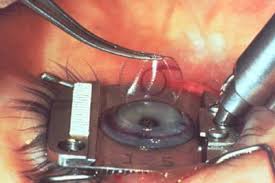
- You cannot physically blink during the laser step — a speculum holds your eyelids open, and numbing drops suppress the blink reflex.
- Eye-tracking technology monitors your eye up to 1,000 times per second, automatically pausing the laser if movement exceeds a safe range and resuming exactly where it left off.
- You will see things during surgery — dimming, blurring, and lights are normal, not signs something is wrong.
- Anxiety-related eye movement is an actively studied area in refractive surgery research, not a dismissed concern.
Why Staying Awake Is Actually Necessary
General anesthesia isn’t used for LASIK, and it isn’t simply skipped for convenience — being awake and cooperative is part of how the procedure achieves precision. During the laser step, you’ll be asked to focus on a small guiding light for roughly the time it takes the laser to treat each eye, often under a minute. Your steady fixation helps keep your eye correctly oriented, working alongside the eye-tracking system rather than replacing it. An unconscious patient simply couldn’t provide that — and it’s worth pairing this with the closely related reassurance that no injections are given before LASIK either, so staying awake was never a trade-off against a more invasive form of anesthesia.
How Long Are You Actually Exposed?
This is worth being precise about, since imagined duration often drives more anxiety than the procedure itself. Total time in the chair per eye, including positioning and setup, typically runs about 10 to 15 minutes. But the part most people picture — the laser actively firing while you hold your gaze — is dramatically shorter, often under a minute per eye for standard corrections. Nearly all of that “chair time” is preparation and positioning, not active treatment.
What You’ll Actually See
Vision during LASIK isn’t uniform or dramatic — most patients describe dimming, blurring, or a shifting field of light rather than anything resembling what imagination (or a dramatic movie scene) might suggest. As numbing drops and instruments are positioned, your vision may blur or fade in and out; during treatment, you’ll typically see the fixation light along with movement or brightness changes as the laser and equipment operate above your eye. None of this indicates a problem — it’s simply what looking through a treated, numbed eye actually looks like from the inside, and it maps directly onto how the procedure actually works — surgeons expect and explain this beforehand precisely so it isn’t alarming in the moment.
What If I Move, Blink, Sneeze, or Cough?
This is the concern behind most of the anxiety around “being awake” — and it has a specific, technology-backed answer rather than just reassurance.
| Concern | What Actually Happens |
|---|---|
| Blinking | ✅ Physically prevented — a speculum holds your eyelids open, and numbing drops suppress the blink reflex entirely |
| Small involuntary eye movements | ✅ Continuously tracked and compensated for in real time by the eye tracker, up to 1,000 times per second |
| Larger movement, sneezing, or coughing | ⚠️ Laser pauses automatically if movement exceeds a safe threshold, then resumes exactly where it stopped — see our specific guidance on sneezing during LASIK |
| Eye rotation while lying down | ✅ Compensated using iris registration, which maps your unique iris pattern before surgery to maintain alignment |
Eye tracking and iris registration together are the reason a fear rooted in “what if my body does something I can’t control” doesn’t hold up against how the procedure is actually engineered.
Verified Patient Satisfaction Data
Beyond the technology itself, it’s worth knowing how patients who’ve actually gone through this experience report feeling about it afterward.
| Data Point | Figure | Source |
|---|---|---|
| Overall LASIK patient satisfaction | 95.4% (range 87.2%–100% across studies) | Systematic literature review, 2,198 subjects across 19 studies |
| Comfort cited as a key satisfaction factor | Among the primary positive themes reported | Patient-reported outcomes study, peer-reviewed |
Comfort during the procedure — not just the visual outcome afterward — is consistently one of the specific factors patients mention when describing a positive experience, which is a meaningful signal given how much anxiety centres on the “awake” part specifically.
Unexpected Sensory Details: Sounds and Smells
Two details catch patients off guard more than almost anything else, simply because nobody warns them in advance. The excimer laser makes a soft clicking sound during treatment, which is entirely normal and part of how the laser fires. Some patients also notice a faint burning smell during the procedure — this is simply the laser interacting with corneal tissue and is a well-documented, expected part of the process, not a sign of any complication.
Is There Real Research Behind This Reassurance?
Yes — this isn’t just clinic marketing copy. Anxiety-related fixation instability during LASIK is an active area of clinical research, including studies specifically examining the correlation between anxiety levels and how steadily patients can hold their gaze during treatment. Researchers have quantified natural eye movement during the ablation step itself, finding movements can occur at frequencies over 100Hz — which is exactly why eye-tracking technology capable of monitoring and compensating at extremely high speed became a standard safety feature rather than an optional upgrade.
Bottom Line
You’re awake during LASIK because your cooperation genuinely improves precision, not despite safety considerations. The specific fear behind this question — moving, blinking, or reacting involuntarily and ruining the result — is addressed by real, high-speed tracking technology, not just careful positioning or luck.
Still feel nervous about staying awake during surgery? Book a consultation at Visual Aids Centre — walking through exactly what you’ll experience, step by step, before surgery day is part of how we help patients feel genuinely ready rather than just told not to worry.
Frequently Asked Questions
Are you awake during LASIK surgery?
Yes. LASIK is performed under topical anesthesia with the patient fully awake — general anesthesia isn’t used or needed, and staying awake helps with the precision the procedure requires.
Can I blink during LASIK?
No, and that’s intentional. A small speculum holds your eyelids open throughout the procedure, and numbing drops suppress the blink reflex, so blinking simply isn’t possible during treatment.
What happens if I move my eye during LASIK?
Eye-tracking technology monitors your eye position up to 1,000 times per second. If movement exceeds a safe range, the laser automatically pauses and resumes precisely where it left off once your eye settles.
What if I sneeze or cough during surgery?
The same eye-tracking safeguard applies — the laser pauses for movement beyond the safe threshold and resumes accurately afterward, so an involuntary reaction doesn’t compromise your results.
What will I actually see during LASIK?
Most patients see dimming, blurring, or shifting light and movement rather than anything sharp or alarming. This is a normal part of the experience and doesn’t indicate a problem.
Why does LASIK smell like burning?
A faint burning smell during treatment is a well-documented, expected part of the laser interacting with corneal tissue, not a sign of a complication.
👁️ MEDICALLY REVIEWED BY
Padmashree Vipin Buckshey
BS Optometry | AIIMS Graduate, 1977 | Padma Shri Honouree | Official Optometrist to the President of India | Laser Vision Correction Specialist & Founder, Visual Aids Centre
Explaining exactly what a patient will see, hear, and feel while awake is a standard part of pre-surgery counselling for Vipin Buckshey, since most of the anxiety around this question resolves once the eye-tracking safeguards are explained concretely rather than described in general terms. He founded Visual Aids Centre in 1980 — the first eye centre in Delhi to introduce LASIK surgery in 1999 — and has overseen 250,000+ Laser Vision Correction procedures across a 45-year career. The eye-tracking and safety information in this article reflects standard technology used across modern refractive surgery platforms, not a proprietary system. Read more at our story.